
Full Car PPF vs Partial PPF – Which Is Better for Your Car? Complete Guide 2026
Full car PPF and partial PPF are two popular ways to protect a vehicle's paint from everyday road hazards. Learn the difference between full and partial Paint Protection Film, including coverage, protection, cost and which option may be right for your car.
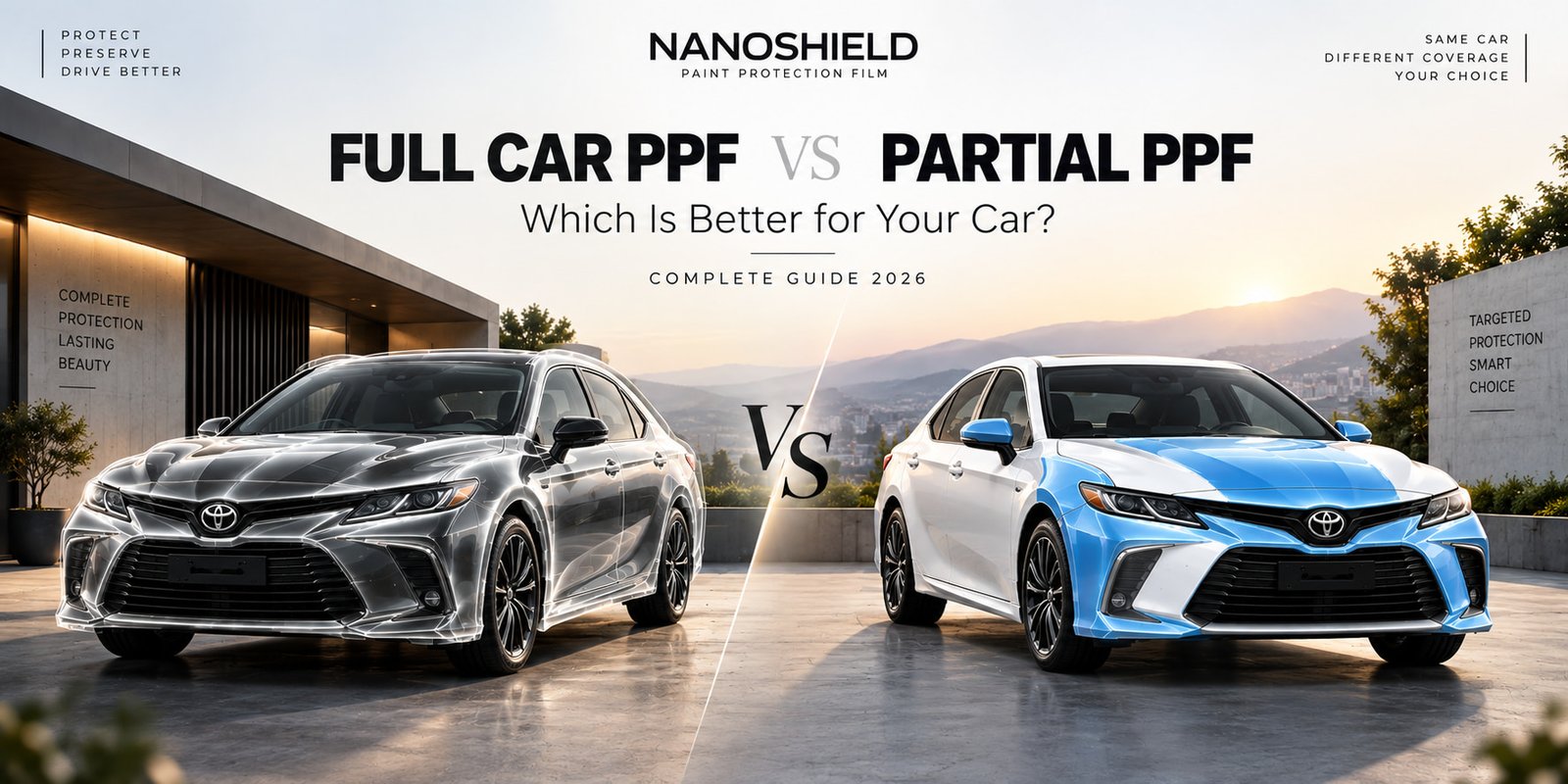
Full Car PPF vs Partial PPF: What's the Difference?
Paint Protection Film can be installed on selected areas of a vehicle or across most of its exterior panels. The main difference between full car PPF and partial PPF is the amount of vehicle surface that is covered.
Full car PPF is designed to provide protection across a much larger portion of the vehicle, while partial PPF focuses on specific high-impact areas such as the front bumper, hood, fenders and side mirrors.
The right choice depends on your budget, driving conditions, vehicle usage and how much of the original paint you want to protect.
What Is Full Car PPF?
Full car PPF means installing Paint Protection Film across most or all major painted exterior panels of a vehicle. It is chosen by car owners who want a higher level of overall paint protection.
By covering more of the vehicle's exterior, full car PPF can help protect a larger area from stone chips, road debris, light scratches and everyday environmental exposure.
What Is Partial PPF?
Partial PPF means applying Paint Protection Film only to selected areas of a vehicle instead of covering the entire exterior. It is commonly chosen by car owners who want protection on the areas most exposed to road debris while keeping the overall installation cost lower.
Common areas for partial PPF include the front bumper, leading edge of the hood, front fenders, side mirrors and other high-impact sections. The exact coverage can vary depending on the vehicle and the owner's protection needs.
Which Areas Are Usually Covered With Partial PPF?
The front of a vehicle usually receives the most exposure to stones, road debris and other hazards while driving. For this reason, partial PPF packages often focus on the front bumper, hood and front fenders.
Side mirrors can also be protected because they are exposed to road debris and everyday environmental conditions. Additional areas can be selected depending on the vehicle's design and how it is driven.
Why Do Car Owners Choose Partial PPF?
Partial PPF can be a practical choice for owners who want targeted protection without covering the entire vehicle. It allows the most vulnerable painted areas to receive an additional protective layer.
It can also be suitable for owners working with a specific budget while still wanting to protect important areas of their car from everyday road exposure.
Full Car PPF vs Partial PPF: Coverage and Protection
The biggest difference between full car PPF and partial PPF is the amount of surface area protected. Full car PPF covers most major painted panels, while partial PPF concentrates protection on selected areas that are more exposed to road hazards.
Both options can help protect vehicle paint from stone chips, road debris, light scratches and everyday surface exposure. However, full car PPF provides a much wider protective layer across the vehicle.
Full Car PPF Provides Wider Protection
Full car PPF is designed for owners who want protection across a larger portion of their vehicle. Depending on the package, the film can be applied to the hood, front and rear bumpers, fenders, doors, side mirrors, quarter panels and other painted areas.
Because more of the vehicle is covered, full car PPF can provide more consistent protection and help maintain the appearance of the vehicle across a larger area.
Partial PPF Focuses on High-Impact Areas
Partial PPF focuses on the sections of a vehicle that are most likely to experience road debris and stone impacts. The front bumper, hood, fenders and side mirrors are among the areas commonly selected.
This approach allows car owners to protect important areas without installing film across the entire vehicle. It can be a practical solution when targeted protection is the main priority.
Which Provides More Protection?
Full car PPF provides greater overall coverage because more of the vehicle's painted surface is protected. Partial PPF provides targeted protection and can be useful for owners who want to focus on the most vulnerable areas.
Full Car PPF vs Partial PPF: Cost and Price
Cost is one of the main factors car owners consider when choosing between full car PPF and partial PPF. The final price can vary depending on the vehicle size, film quality, coverage area, installation quality and condition of the vehicle's paint.
Because full car PPF covers a much larger portion of the vehicle, it generally costs more than a partial PPF package. Partial PPF requires less material and focuses on selected high-impact areas, making it a more budget-friendly option for many car owners.
Full Car PPF Price
Full car PPF pricing depends on the size and design of the vehicle as well as the type and quality of film selected. Larger SUVs and vehicles with complex body shapes may require more material and installation time.
Premium films and professional installation can also increase the total cost. However, full coverage provides protection across a much larger area of the vehicle's original paint.
Partial PPF Price
Partial PPF generally costs less because only selected areas of the vehicle are covered. The price depends on which panels are included in the package and the quality of the PPF used.
A partial package can be a practical option for owners who want to protect high-impact areas such as the front bumper, hood, fenders and mirrors while keeping the overall installation cost lower.
Is Full Car PPF Worth the Extra Cost?
If your priority is maximum coverage and protecting a larger portion of your vehicle's original paint, full car PPF can provide greater overall protection. If your budget is limited or you mainly want to protect high-impact areas, partial PPF may offer better value for your needs.
Benefits of Full Car PPF
Full car PPF is designed for vehicle owners who want broader protection across the painted exterior. Instead of protecting only selected high-impact areas, full coverage allows more of the vehicle's original paint to receive an additional protective layer.
This can be particularly useful for owners who want a consistent level of protection across the vehicle and prefer to reduce the number of exposed painted areas.
Protects More of the Original Paint
One of the biggest advantages of full car PPF is its wider coverage. Major painted panels can be protected from common road hazards such as stone chips, road debris, light scratches and everyday surface exposure.
By covering more areas, full car PPF can help maintain the vehicle's original appearance across a larger portion of the exterior.
Consistent Protection Across the Vehicle
Partial PPF leaves some painted areas uncovered by design, while full car PPF provides a more consistent protective layer across the vehicle. This can be useful for owners who want to minimize differences between protected and unprotected panels.
Ideal for New or Valuable Cars
Full car PPF can be an attractive option for owners of new, premium or carefully maintained vehicles who want to preserve the condition of the original factory paint for as long as possible.
Benefits of Partial PPF
Partial PPF is a practical option for car owners who want targeted paint protection without covering the entire vehicle. It focuses on areas that are more likely to experience stone chips, road debris and everyday driving exposure.
By selecting specific panels, vehicle owners can protect important areas while keeping the overall installation cost lower than a full car PPF package.
Lower Installation Cost
One of the main advantages of partial PPF is its lower cost compared with full vehicle coverage. Since less material is required and fewer panels need to be installed, the overall price can be more budget-friendly.
Protects High-Impact Areas
Partial PPF can focus protection on areas such as the front bumper, hood, front fenders and side mirrors. These areas are commonly exposed to stones, road debris and other hazards during everyday driving.
Good Option for Daily Driven Cars
For vehicles that are regularly driven in city traffic or on highways, protecting the most exposed areas can provide useful additional protection while avoiding the cost of covering the entire vehicle.
Easy to Upgrade Later
Another advantage of starting with partial PPF is that additional areas can be considered later if your protection needs change. This allows vehicle owners to begin with important panels and expand coverage when required.
Which Areas Should You Protect With PPF?
The right PPF coverage depends on how your vehicle is driven and which areas are most exposed to road debris. Some parts of a car receive much more impact than others, making them important areas for Paint Protection Film.
Drivers who mainly use their vehicle in city traffic may prefer targeted protection, while owners who regularly travel on highways may benefit from protecting a larger portion of the vehicle.
Front Bumper
The front bumper is one of the most exposed areas of a vehicle. It can receive direct impact from stones, road debris, insects and other particles while driving, making it a common choice for PPF coverage.
Hood and Front Fenders
The hood and front fenders can also experience frequent exposure to stones and road debris. Protecting these areas can help reduce visible paint damage and maintain the vehicle's exterior appearance.
Side Mirrors
Side mirrors are another commonly protected area because they extend from the vehicle's body and can be exposed to road debris, dust and everyday environmental conditions.
Doors and Other Painted Panels
Owners choosing full car PPF can also protect doors, quarter panels, rear sections and other painted areas. This provides broader coverage and reduces the amount of exposed original paint across the vehicle.
Which Coverage Is Right for You?
If you want protection mainly on the highest-impact areas, partial PPF can be a practical choice. If you want broader protection across the vehicle and prefer to minimize exposed painted surfaces, full car PPF may be the better option.
Full Car PPF vs Partial PPF for a New Car
New cars are often the best candidates for Paint Protection Film because the factory paint is still in excellent condition. Protecting the paint early can help reduce exposure to road debris, stone chips and everyday driving hazards.
The choice between full car PPF and partial PPF depends on how much of the vehicle you want to protect and how much you are willing to invest in paint protection.
Why Full Car PPF Can Be Better for New Cars
Full car PPF provides wider coverage across the vehicle's painted surfaces. This can be useful for owners who want to maintain the original factory appearance and reduce the number of unprotected painted areas.
It can also be a suitable choice for owners who plan to keep their new vehicle for many years and want broader protection from everyday road exposure.
When Partial PPF Makes Sense for a New Car
Partial PPF can be a practical option when the main goal is protecting the highest-impact areas while keeping the initial installation cost lower.
A new car owner may choose to protect areas such as the front bumper, hood, fenders and side mirrors first, and consider additional coverage later if needed.
Which Is Better for a New Car?
If maximum coverage and long-term paint preservation are your priorities, full car PPF is generally the more comprehensive option. If you want targeted protection with a lower initial cost, partial PPF can be a practical alternative.
Full Car PPF vs Partial PPF for Daily Driven Cars
Daily driven vehicles are regularly exposed to traffic, road debris, dust, sunlight and other conditions that can affect the exterior paint. Choosing the right PPF coverage can help protect the areas that receive the most exposure during everyday driving.
Both full car PPF and partial PPF can be useful for daily driven cars, but the right choice depends on your driving habits, road conditions and how much of the vehicle you want to protect.
Partial PPF for City Driving
Partial PPF can be a practical option for vehicles that are primarily driven around the city. It allows owners to focus protection on high-impact areas such as the front bumper, hood, fenders and side mirrors.
This approach can provide targeted protection while keeping the overall installation cost lower than full vehicle coverage.
Full Car PPF for Highway Driving
Vehicles that regularly travel on highways may experience greater exposure to stones, road debris and other high-speed impacts. In these situations, broader PPF coverage can provide protection across more of the vehicle's painted surface.
Full car PPF can therefore be a suitable option for drivers who frequently travel long distances and want to reduce the number of exposed painted areas.
Which Is Better for a Daily Driven Car?
If you mainly drive in the city and want protection on the most vulnerable areas, partial PPF can be a practical choice. If you drive frequently on highways or want broader protection, full car PPF may be the better option.
Full Car PPF vs Partial PPF: Installation Process
Whether you choose full car PPF or partial PPF, professional installation is important for achieving a clean and long-lasting finish. The vehicle's paint should be properly cleaned and prepared before the film is applied.
The installation process can include washing, decontamination, surface preparation, accurate film positioning and careful finishing around the edges. The exact process can vary depending on the vehicle and coverage selected.
Full Car PPF Installation
Full car PPF requires the installer to work across a much larger number of vehicle panels. Each section needs careful positioning so the film follows the vehicle's curves and body lines while maintaining a smooth appearance.
Because more panels are covered, full car PPF generally requires more installation time and careful attention to edges, corners and panel transitions.
Partial PPF Installation
Partial PPF focuses on selected areas of the vehicle, which can make the installation process shorter compared with full coverage. The installer still needs to ensure accurate positioning and clean finishing around each protected panel.
PPF Maintenance After Installation
Regular maintenance is important for both full and partial PPF. Gentle washing with suitable automotive products can help keep the film clean and maintain its appearance.
Avoiding harsh chemicals, abrasive tools and aggressive cleaning methods can also help protect the film's surface and edges over time.
Full Car PPF vs Partial PPF: Pros & Cons
Both full car PPF and partial PPF can help protect your vehicle's original paint, but each option has different advantages and limitations. The right choice depends on your budget, driving habits, vehicle condition and the level of protection you want.
Full Car PPF Pros
Full car PPF provides the most complete coverage because the film is installed across most or all painted exterior panels. This gives the vehicle broader protection against road debris, stone chips, scratches and everyday paint damage.
It can also provide more consistent protection and appearance across the entire vehicle, making it a suitable choice for owners who want to protect their car's original paint as much as possible.
Full Car PPF Cons
The main disadvantage of full car PPF is the higher installation cost compared with partial coverage. Because more panels need to be prepared and covered, installation can also take more time.
Professional installation is especially important with full coverage because larger areas of film require accurate positioning, clean edges and careful finishing.
Partial PPF Pros
Partial PPF can be a more budget-friendly way to protect the vehicle's most exposed areas. Instead of covering the entire car, the film can be installed on selected panels such as the front bumper, hood, fenders and mirrors.
This approach can provide useful protection while keeping the overall installation cost lower than full car PPF.
Partial PPF Cons
Partial PPF does not provide the same level of overall coverage as full car PPF. Areas that are not covered remain exposed to road debris, scratches and other forms of everyday paint damage.
Depending on the selected coverage, the transition between protected and unprotected areas may also become noticeable over time as the paint ages differently.
Full Car PPF vs Partial PPF: Which Is Better?
Choosing between full car PPF and partial PPF depends on how much of your vehicle you want to protect and how much you are comfortable investing. Both options can help protect the original paint, but they provide different levels of coverage.
Full car PPF is the better choice for drivers who want maximum paint protection across the vehicle. It is especially suitable for new cars, high-value vehicles and owners who want to keep the original paint in the best possible condition.
Partial PPF can be a practical option for drivers who want protection on the most exposed areas while keeping the installation cost lower. It can be useful when the main priority is protecting the front end and other high-impact areas.
Final Recommendation
If your priority is the highest level of overall paint protection, full car PPF is generally the more complete solution. If budget is an important factor, partial PPF can provide targeted protection for the areas that are most likely to experience road damage.
Before choosing your coverage, consider your vehicle, driving conditions, parking environment and long-term plans for the car. A professional PPF installer can also help you select the coverage that best matches your needs.
Full Car PPF vs Partial PPF: Final Verdict
There is no single option that is best for every vehicle. Full car PPF offers broader protection, while partial PPF provides focused protection at a lower overall cost. The best choice is the one that gives your car the right balance of protection, coverage and value.