
PPF Yellowing – Why Does Paint Protection Film Turn Yellow? Complete Guide 2026
PPF yellowing is one of the common concerns vehicle owners may have when choosing Paint Protection Film. A clear PPF is designed to protect the vehicle's original paint while maintaining a clean and transparent appearance, but the film can change in appearance over time depending on its quality, construction, exposure and maintenance.
Yellowing can make a clear Paint Protection Film look less transparent and may become more noticeable on white, silver and other light-colored vehicles. Understanding why PPF can yellow, what factors contribute to it and how to reduce the risk can help you make a more informed decision when selecting paint protection for your car.
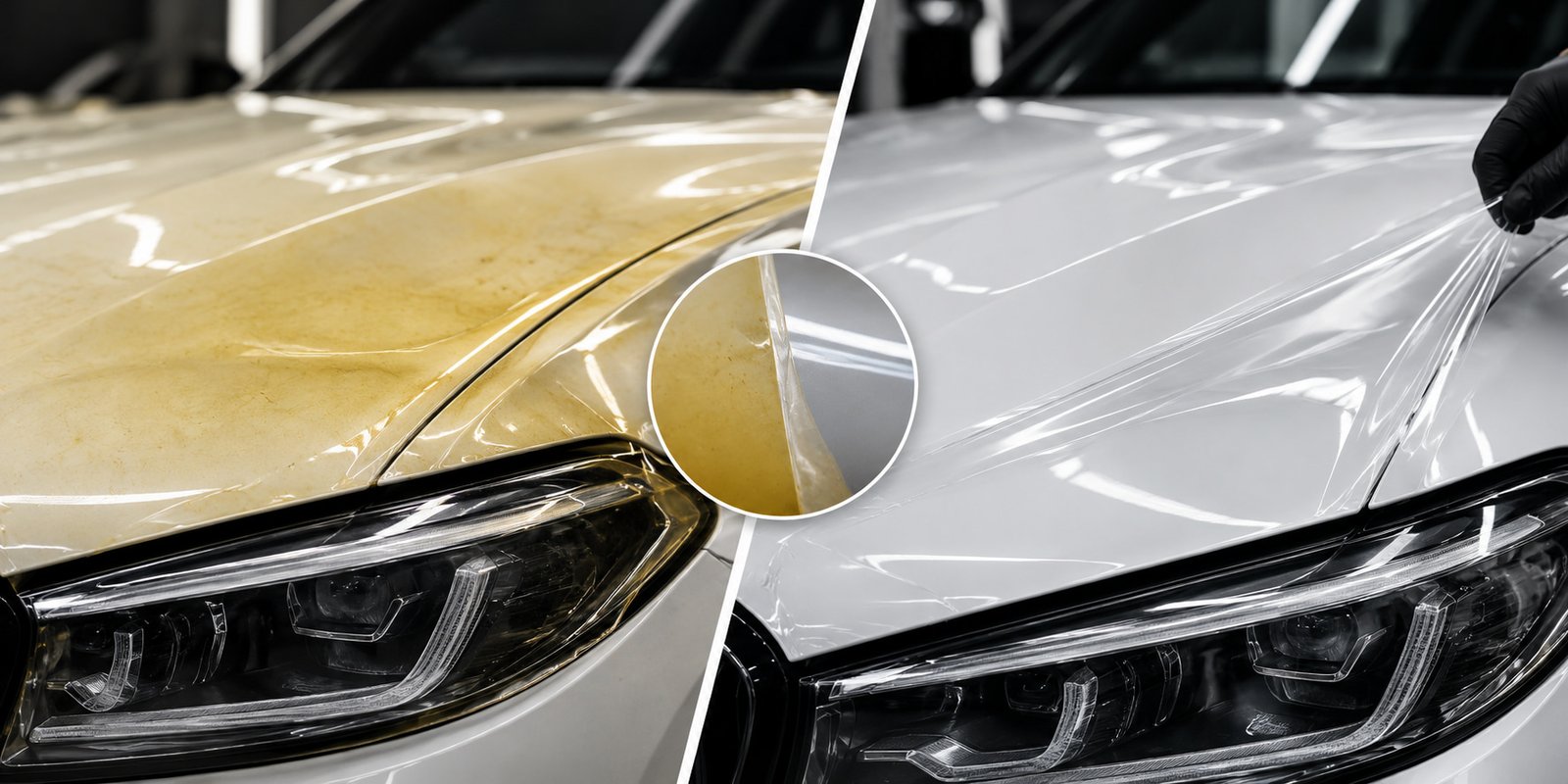
What Is PPF Yellowing?
PPF yellowing refers to a visible change in the appearance of a clear Paint Protection Film, where the film can develop a yellowish or warmer tone instead of remaining highly transparent.
This change may become easier to notice after prolonged exposure to sunlight, environmental contaminants and other conditions. The exact behavior can vary between different PPF products because films use different materials, coatings and construction technologies.
Important: Not every PPF will yellow at the same rate. Film quality, UV exposure, environmental conditions, installation quality and maintenance can all affect the long-term appearance of Paint Protection Film.
Why Does Clear PPF Turn Yellow?
Several factors can contribute to changes in the appearance of PPF over time. Long-term exposure to sunlight and UV radiation is one factor that can affect the film's appearance, while heat, environmental contamination and the overall quality of the film can also play a role.
Modern PPF products are designed with protective layers and advanced film technology to improve durability and appearance, but the performance of each product can vary. This is why it is important to consider the film specifications and warranty instead of choosing a product based only on price.
To understand how professional Paint Protection Film protects your vehicle, you can also explore our complete PPF service guide.
What Causes PPF to Turn Yellow?
The appearance of clear PPF can change over time because the film is continuously exposed to the outside environment. Several factors can contribute to yellowing or a change in the film's clarity.
1. UV Exposure
Long-term exposure to sunlight is one of the important environmental factors affecting clear PPF. Ultraviolet radiation can contribute to changes in the appearance of polymer-based protective films over time.
2. Heat and Environmental Conditions
Vehicles regularly experience heat, sunlight, moisture, dust and changing outdoor temperatures. Continuous exposure to these conditions can affect the long-term appearance of a protective film.
3. Film Quality
The construction and quality of the PPF itself can make a difference. Different films use different materials, protective layers, coatings and adhesive systems, so their long-term appearance and performance may vary.
Key point: A lower price does not necessarily mean the same film performance. When comparing PPF, look at the film specifications, warranty, manufacturer information and installation quality rather than price alone.
4. Improper Maintenance
Incorrect cleaning methods, aggressive chemicals or poor maintenance practices can affect the surface appearance of PPF. Following the manufacturer's recommended care instructions can help maintain the film properly.
5. Environmental Contamination
Road dust, pollutants, bird droppings, tree sap and other contaminants can remain on the film surface if they are not cleaned properly. Regular and suitable washing can help keep the film's appearance cleaner.
For a better understanding of the different factors involved in choosing Paint Protection Film , always consider the film's construction, warranty and recommended maintenance requirements.
How to Prevent PPF Yellowing
Although no protective film can be completely isolated from environmental exposure, proper product selection and regular care can help maintain the appearance of clear PPF for longer.
Choose a Quality PPF
Start with a film from a reputable manufacturer that provides clear product specifications and a defined warranty. The quality of the film's construction and protective top coat can affect its long-term appearance.
Check the Warranty
Before installation, carefully review the warranty terms. Check what the manufacturer covers, the warranty duration and whether appearance-related issues such as yellowing are included under the specific product warranty.
Tip: Keep the original invoice, warranty documentation and product details after installation. These documents can be useful if you need to discuss a warranty-related issue with the installer or manufacturer.
Follow Proper Washing Practices
Wash the vehicle using suitable automotive cleaning products and avoid harsh chemicals that are not recommended for PPF. Regular cleaning can also prevent contaminants from remaining on the film surface for extended periods.
Remove Contaminants Promptly
Bird droppings, tree sap, road grime and other contaminants should be removed as soon as reasonably possible. Allowing contaminants to remain on the surface for long periods can affect the appearance of the film.
Use Professional Installation
Proper installation is another important part of the overall PPF system. Correct surface preparation, clean application and proper edge finishing can help the film perform and look as intended.
If you are researching Paint Protection Film for your vehicle, compare the film specifications, warranty and installation process before making a decision.
Does All PPF Eventually Turn Yellow?
No. Not all PPF turns yellow at the same rate, and the long-term appearance of a film can vary significantly between different products and conditions.
Modern Paint Protection Film is designed to remain clear and provide durable protection, but the actual performance depends on the film's construction, protective layers, environmental exposure and maintenance.
Why Some Films Stay Clear Longer
Higher-quality films may use advanced materials and protective top-coat technologies designed to improve optical clarity and resistance to environmental exposure. The manufacturer's specifications and warranty can provide useful information about the expected performance of a particular product.
Vehicle Color Can Make Yellowing More Noticeable
A change in the appearance of clear PPF can be more noticeable on lighter-colored vehicles, particularly white and silver cars. On darker vehicles, the same change may be less visually obvious.
Important: A film looking slightly different over time does not automatically mean that the vehicle's paint underneath has been damaged. The condition of the film itself should be inspected before deciding what action is required.
When Should Yellowed PPF Be Replaced?
If the film develops significant discoloration, cracking, peeling, excessive contamination or other visible deterioration, professional inspection can help determine whether replacement is appropriate.
In many cases, the decision depends on the severity of the film's condition, its age, warranty coverage and the appearance the vehicle owner wants to maintain.
When selecting Paint Protection Film , consider both its protective performance and its long-term optical appearance.
How to Tell If Your PPF Is Starting to Yellow
PPF yellowing can develop gradually, so it may not always be obvious at first. Regularly checking the film can help you notice changes in appearance before they become more noticeable.
Check the Film in Natural Light
Inspect the vehicle in daylight and look closely at the clear film from different angles. A yellow or warmer tint may be easier to notice on white and other light-colored paint.
Compare Different Areas of the Vehicle
If only certain panels have PPF, compare the protected area with an unprotected area under similar lighting. A visible difference in clarity or color can help identify a change in the film's appearance.
Do not judge the film from one small spot alone. Dirt, road contamination, water marks or surface residue can temporarily change how clear PPF looks. Clean the surface properly before assessing its actual condition.
Look for More Than Yellowing
A professional inspection should also check for edge lifting, cracking, peeling, bubbling, scratches and other signs of film deterioration. These issues can provide a better indication of the overall condition of the PPF.
Check the Film's Age and Warranty
If you notice a significant change in appearance, check when the film was installed and review the original warranty documentation. The installer or manufacturer may be able to advise whether the issue falls within the applicable warranty terms.
Choosing quality Paint Protection Film and following the recommended maintenance routine can help you maintain the appearance and protective performance of the film.
Can Yellowed PPF Be Fixed?
Whether yellowed PPF can be restored depends on the condition of the film. A change in appearance caused by surface contamination may sometimes improve after proper cleaning, but actual discoloration within the film may require a different solution.
Start With a Proper Inspection
Before attempting any treatment, the film should be inspected carefully. Surface dirt, road film, water spots and other contaminants can sometimes make clear PPF appear darker or more yellow than it actually is.
Cleaning May Improve Surface Appearance
If the problem is primarily surface contamination, using the manufacturer's recommended cleaning products and washing procedure may improve the appearance of the film.
Important: Avoid aggressive polishing, abrasive compounds or unapproved chemicals on PPF unless the film manufacturer specifically recommends them. The wrong product or technique can damage the film's surface.
When Replacement May Be Necessary
If the yellow appearance is caused by deterioration or discoloration within the film itself, cleaning may not restore the original clarity. In such cases, professional inspection can help determine whether the affected section should be replaced.
Check Warranty Coverage
If the PPF is still within its applicable warranty period, contact the original installer or manufacturer before removing the film. Keep your installation invoice and warranty information available for reference.
When replacing damaged or aged film, selecting a quality Paint Protection Film and having it installed professionally can help maintain a clear and consistent appearance.
Does PPF Yellowing Affect Your Car Paint?
PPF yellowing primarily affects the appearance of the protective film itself. The film is installed as a protective layer over the vehicle's original paint, so a change in the film's clarity does not automatically mean that the paint underneath has been damaged.
However, if the film becomes heavily aged, cracked, lifted or damaged, it may no longer provide the same level of protection it was originally installed to provide. This is why the condition of the film should be checked regularly.
Yellow Film vs. Damaged Paint
A yellowish appearance can sometimes make the vehicle's paint look different from its original color. This is particularly noticeable on white and other light-colored vehicles. Before assuming that the paint has changed color, the condition of the PPF should be inspected.
Why Film Condition Matters
PPF is designed to act as a sacrificial protective layer. If the film becomes severely deteriorated, replacing the affected section can restore the appearance and provide a fresh protective layer over the paint.
Good practice: Inspect your PPF periodically for discoloration, cracking, lifting, bubbling and other visible changes. Early inspection can help you decide whether cleaning, professional evaluation or replacement is appropriate.
When to Ask a Professional
If you are unsure whether the color change is coming from the film or the paint underneath, have the vehicle inspected by a professional PPF installer. They can examine the film and advise on the appropriate next step.
If replacement is required, choosing a suitable Paint Protection Film can help restore both the appearance and protective function of the affected area.
How Long Does PPF Stay Clear?
The length of time that clear PPF maintains its original appearance can vary from one product and vehicle to another. There is no single lifespan that applies to every film because environmental exposure, film construction, maintenance and installation conditions are different.
Film Quality Matters
The materials and protective layers used in the film can influence how it performs over time. When comparing products, look at the manufacturer's specifications and warranty rather than relying only on a general lifespan number.
Driving and Parking Conditions
A vehicle that spends many hours outdoors can experience more direct sunlight and environmental exposure than a vehicle that is regularly parked in a covered or enclosed area. These differences can affect the long-term appearance of the film.
Remember: A vehicle's environment matters. Sun exposure, heat, road contamination, washing habits and general maintenance can all influence the condition and appearance of PPF over time.
Maintenance Can Help Preserve Appearance
Regular washing with suitable automotive products can help keep the film clean and reduce the buildup of contaminants. Following the manufacturer's care recommendations is an important part of maintaining clear PPF.
Warranty Is an Important Reference
A manufacturer's warranty can provide useful information about the product's expected service conditions and covered issues. Always read the actual warranty terms for the specific PPF product being installed.
If you are comparing Paint Protection Film options, consider clarity, material quality, warranty, installation and maintenance requirements together.
How to Maintain Clear PPF and Reduce the Risk of Yellowing
Proper maintenance is an important part of keeping clear PPF looking clean and transparent. While maintenance cannot completely control how a film ages, good care can help reduce unnecessary surface contamination and preserve the film's appearance.
Wash the Vehicle Regularly
Regular washing helps remove dust, road grime, bird droppings and other contaminants from the surface. Use products and washing methods that are suitable for PPF and follow the manufacturer's recommendations.
Avoid Harsh Chemicals
Strong chemicals or cleaning products that are not intended for automotive protective films may affect the film's surface. When in doubt, use a PPF-safe product recommended by the film manufacturer or installer.
Maintenance tip: Do not allow bird droppings, tree sap or heavy road contamination to remain on the film for extended periods. Clean contaminants carefully rather than aggressively scrubbing the surface.
Use Proper Washing Tools
Soft microfiber towels and suitable automotive wash tools can help reduce unnecessary surface friction. Avoid abrasive pads, rough brushes and aggressive cleaning techniques on the film.
Inspect the Film Regularly
Take a few minutes to inspect the PPF from time to time. Look for changes in clarity, yellowing, peeling, edge lifting, cracking or other visible signs of deterioration.
If you notice a significant change, have the affected area checked by a professional before attempting any aggressive cleaning or treatment.
Choosing quality Paint Protection Film and following the correct care routine can help maintain the film's appearance for longer.
Does PPF Quality Affect Yellowing?
Yes. The quality and construction of a PPF product can influence how its appearance changes over time. Different films can use different materials, protective layers, coatings and adhesive systems, so their performance may not be identical.
Material and Film Construction
The underlying film material is an important part of the PPF system. Manufacturers may use different formulations and construction methods to achieve specific levels of clarity, flexibility, durability and environmental resistance.
Protective Top Coat
Many modern PPF products include a protective top coat designed to improve surface performance and maintain appearance. The characteristics of this layer can affect how the film responds to everyday environmental exposure and maintenance.
What to compare: When researching PPF, look at the manufacturer's technical information, film construction, optical clarity, warranty and recommended maintenance rather than choosing a product based only on its price.
Warranty Can Provide Useful Information
A clearly defined manufacturer warranty can help you understand the conditions under which the film is expected to perform. Read the actual warranty terms carefully and check what appearance-related issues are covered.
Professional Installation Still Matters
Even a high-quality film needs proper installation. Surface preparation, clean application, correct pattern placement and careful edge finishing all contribute to the final appearance of the installed PPF.
If you are comparing Paint Protection Film options, consider the complete package of film quality, installation, warranty and aftercare.
PPF Yellowing vs Normal Film Aging
Not every change in the appearance of PPF should be described as severe yellowing. Clear protective film can experience normal surface wear and environmental exposure over time, while significant discoloration may indicate a more noticeable change in the film.
Normal Surface Changes
Dust, road grime, water spots and other contaminants can temporarily make a clear film look less transparent. Proper cleaning may improve the appearance when the issue is limited to the surface.
More Noticeable Discoloration
If the film continues to show a yellow or warm tint after proper cleaning, the change may be within the film itself. The age and condition of the film should be considered before deciding whether replacement is necessary.
Important: Appearance alone may not identify the exact cause. A professional inspection can help determine whether the issue is contamination, surface wear, film deterioration or another condition.
Check the Entire Panel
Inspect the complete protected panel rather than focusing on a single small area. Differences in lighting, reflections and surface contamination can make one section appear different from another.
Compare With the Original Condition
Installation photos, invoices and warranty documents can be useful references when assessing how the film has changed over time. If you have photographs from the original installation, compare them under similar lighting conditions.
For vehicle owners researching Paint Protection Film , understanding both normal aging and significant discoloration can make it easier to monitor the film's condition.
Final Thoughts: Choosing PPF That Stays Clear
PPF yellowing is an important factor to consider when choosing clear Paint Protection Film, especially for owners who want their vehicle to maintain a clean and transparent appearance over time.
The long-term appearance of PPF can depend on several factors, including the film's construction, protective top coat, UV and environmental exposure, maintenance and installation quality. Because of these variables, different films may perform differently under different conditions.
Before choosing PPF, check:
• Film quality and construction
• Optical clarity
• Protective top-coat technology
• Manufacturer warranty
• Installation quality
• Recommended maintenance
• Expected use and environmental exposure
The Right Film Is Only One Part of the Equation
A quality film can provide a strong foundation for long-term paint protection, but professional installation and proper aftercare are equally important. Regular inspection and suitable cleaning can help you identify changes in the film before they become more noticeable.
If the film eventually develops significant discoloration, cracking, peeling or other deterioration, professional inspection can help determine whether cleaning, warranty support or replacement is the appropriate next step.
If you are looking for quality Paint Protection Film in Lahore, compare the film specifications, warranty and installation process before making your choice.
Protect Your Vehicle's Original Paint
Choosing the right PPF and maintaining it correctly can help keep your vehicle protected while preserving a clean, clear appearance.