
Types of Paint Protection Film (PPF) – Complete Guide 2026
There are different types of Paint Protection Film available for cars, and each type is designed to provide a different combination of paint protection, appearance, durability and finish. Choosing the right PPF depends on your vehicle, driving conditions, preferred appearance and the level of protection you want.
What Are the Different Types of Paint Protection Film?
Paint Protection Film, commonly known as PPF, is a transparent or specialized protective film installed over a vehicle's painted surfaces. Modern PPF is available in several finishes and technologies, allowing car owners to choose protection that matches both their practical needs and personal style.
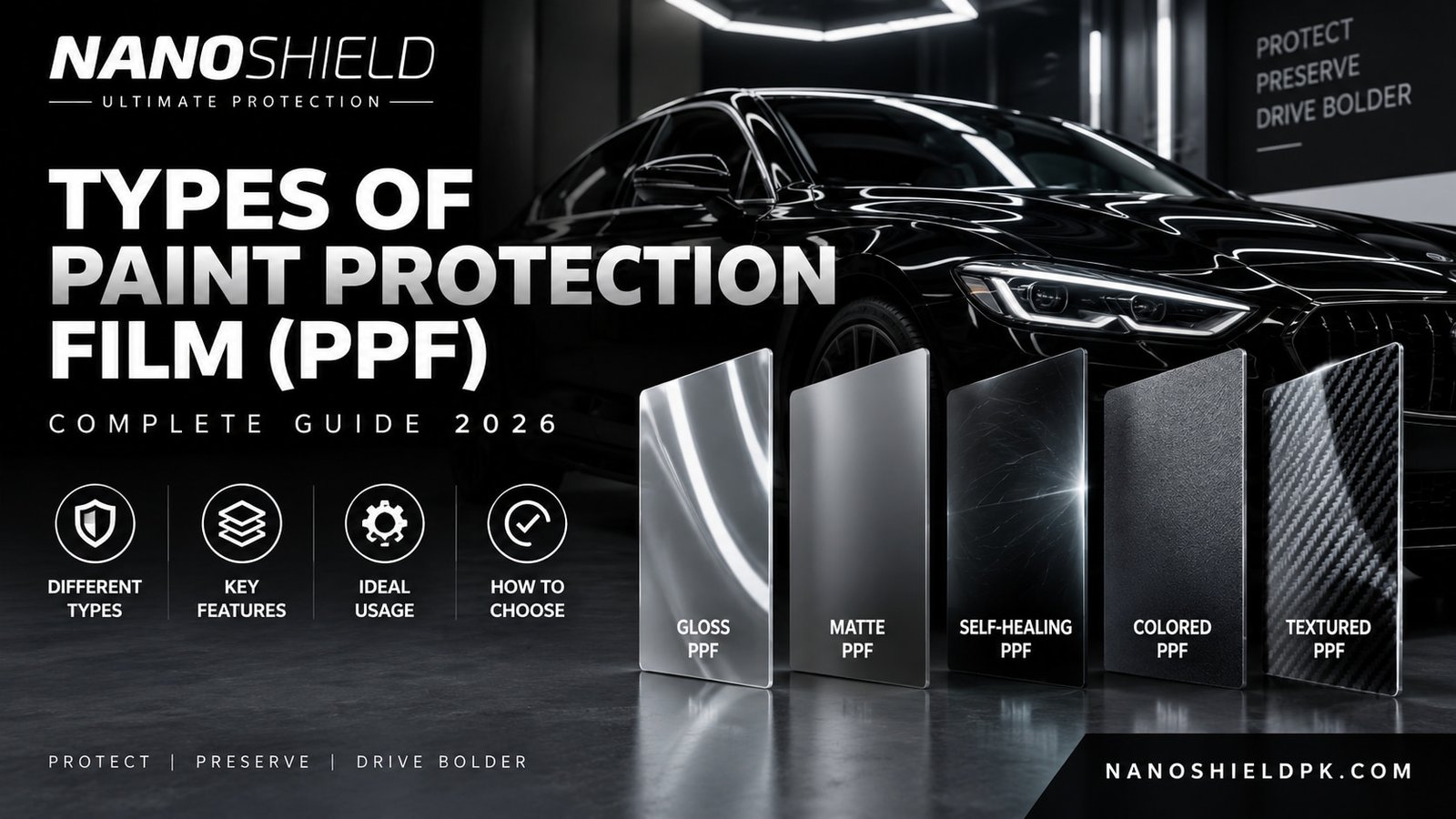
The most common types include gloss PPF, matte PPF, self-healing PPF, colored PPF and textured PPF. While these films share the main purpose of protecting automotive paint, they can differ significantly in appearance, surface characteristics and intended use.
Understanding these different options makes it easier to decide which Paint Protection Film is suitable for your vehicle. A daily-driven car may need a different film compared with a luxury, sports or enthusiast vehicle.
Quick Answer: The main types of PPF include gloss, matte, self-healing, colored and textured films. The best choice depends on the finish you want, the level of protection required and how the vehicle is used.
Gloss PPF vs Matte PPF
Two of the most popular types of Paint Protection Film are gloss PPF and matte PPF. Both are designed to help protect a vehicle's paint from everyday road exposure, but they create a very different visual appearance.
Gloss PPF is designed to maintain or enhance the shiny appearance of the original paint, while matte PPF gives the vehicle a smooth, low-gloss finish. The right choice depends largely on whether you want to preserve the factory appearance or create a more distinctive look.
1. Gloss Paint Protection Film
Gloss PPF is the most traditional and widely preferred type of paint protection film. It has a clear, high-gloss surface that allows the original color and finish of the vehicle to remain highly visible.
When professionally installed, a quality gloss film can give the paint a clean and polished appearance while creating a protective layer over the factory finish. It is particularly popular with owners who want protection without significantly changing the original look of their car.
Best for: New cars, luxury vehicles, daily drivers and owners who want to preserve the original glossy appearance of their paint.
Benefits of Gloss PPF
Gloss PPF can provide a combination of paint protection and visual enhancement. Its clear finish keeps the vehicle looking shiny while the film helps reduce the impact of common road hazards such as stone chips, light scratches and surface contamination.
It is also a practical option when the main goal is protecting the original factory paint without changing the vehicle's overall appearance.
2. Matte Paint Protection Film
Matte PPF, sometimes called satin or stealth-style PPF depending on the finish, is designed to create a smooth, non-gloss appearance. Instead of reflecting light like traditional gloss paint, it produces a softer and more understated finish.
Matte PPF is especially popular among car enthusiasts who want to change the visual character of their vehicle while still adding a protective layer over the paint. It can give a glossy factory-finished car a more modern and distinctive appearance.
Best for: Sports cars, luxury vehicles, enthusiasts and owners who prefer a modern matte or satin appearance.
Benefits of Matte PPF
One of the biggest advantages of matte PPF is its ability to change the appearance of a vehicle while still providing paint protection. It can create a premium stealth-like finish and can also be used on selected panels for a custom two-tone appearance.
Like other forms of Paint Protection Film, its performance depends on film quality, installation quality and proper maintenance.
Self-Healing Paint Protection Film
Self-healing PPF is one of the most advanced types of Paint Protection Film available for modern vehicles. It is designed with a special top coating that can help minor surface marks and light scratches disappear or become much less visible when exposed to suitable heat.
This technology makes self-healing film particularly useful for vehicles that are regularly driven on busy roads, parked outdoors or exposed to everyday washing and environmental conditions.
How Does Self-Healing PPF Work?
Self-healing PPF uses an elastic top layer that can recover from certain types of minor surface damage. When the surface receives appropriate heat, the coating can gradually return toward its original smooth appearance.
Heat can come naturally from sunlight or from another suitable controlled source. The exact self-healing performance depends on the film's construction, coating technology, temperature and type of surface mark.
Important: Self-healing PPF is designed mainly for minor surface scratches and swirl-type marks. It does not mean that deep scratches, cuts, dents or major physical damage will automatically repair themselves.
Benefits of Self-Healing PPF
One of the biggest advantages of self-healing PPF is that it helps the vehicle maintain a cleaner and more polished appearance over time. Minor marks caused by normal washing, drying and everyday contact may become less noticeable as the film's surface recovers.
Self-healing technology can also reduce the need for aggressive polishing of the film surface. Instead of repeatedly trying to remove light marks manually, the protective layer can use its built-in recovery properties under suitable conditions.
Is Self-Healing PPF Worth It?
For many car owners, self-healing PPF is worth considering when maintaining the vehicle's appearance is a high priority. It is especially useful for luxury cars, new vehicles and daily drivers where minor surface marks can accumulate over time.
However, self-healing capability should not be the only factor when choosing PPF. Film thickness, clarity, adhesive quality, durability, warranty and professional installation are also important when selecting the right protection for your vehicle.
Colored Paint Protection Film
Colored PPF is a specialized type of Paint Protection Film that combines paint protection with a change in the vehicle's exterior appearance. Unlike traditional clear PPF, colored films are available in different shades and finishes, allowing car owners to create a more customized look.
Colored PPF can be an interesting option for drivers who want to refresh the appearance of their vehicle while still adding a protective layer over the original paint. Depending on the product, colored films may be available in gloss, satin, matte or other specialized finishes.
How Does Colored PPF Work?
Colored PPF is installed over the vehicle's existing painted surface in much the same way as other PPF products. The film forms a protective layer between the paint and everyday external exposure.
The color layer gives the vehicle its new visual appearance, while the film itself can help protect the underlying paint from common road hazards such as light scratches, stone chips and surface contamination.
Best for: Car owners who want both paint protection and a customized exterior appearance without permanently repainting the vehicle.
Benefits of Colored PPF
The main advantage of colored PPF is that it combines two purposes in one product. Instead of installing a clear protective film and changing the vehicle's appearance separately, colored PPF can provide a protective layer while giving the car a different finish or color.
It can also help preserve the original paint underneath the film. When properly installed and maintained, the protected factory finish can remain shielded from many everyday environmental and road-related exposures.
Colored PPF vs Traditional Vinyl Wrap
Colored PPF and vinyl wrap can both change the appearance of a vehicle, but their primary purposes are different. Vinyl wrap is mainly focused on changing color and styling, while colored PPF is designed to combine appearance with paint protection.
For drivers whose priority is protecting the original paint while also achieving a customized look, colored PPF can be a strong option to consider.
Is Colored PPF Worth It?
Colored PPF can be worth considering for enthusiasts, luxury vehicles and owners who want a unique appearance without giving up the benefits of a protective film. The final result, however, depends heavily on film quality, preparation and professional installation.
Textured Paint Protection Film
Textured PPF is another specialized option for car owners who want a protective film with a distinctive surface appearance. Instead of having a completely smooth traditional gloss finish, textured films can create a unique visual effect on the vehicle's paint.
Depending on the product, textured PPF can provide finishes that add depth, pattern or a specialized surface character while still functioning as a protective layer over the vehicle's painted panels.
What Makes Textured PPF Different?
The main difference between textured PPF and standard gloss or matte PPF is the appearance and surface structure of the film. Textured films are designed to create a more customized finish rather than simply preserving the factory gloss or producing a uniform matte look.
This makes textured PPF particularly interesting for vehicle owners who want their car to stand out while adding an additional layer of protection over the original paint.
Best for: Enthusiast vehicles, customized builds, sports cars and owners looking for a distinctive exterior finish.
Benefits of Textured PPF
Textured PPF can combine visual customization with the protective purpose of a paint protection film. It can help reduce exposure of the underlying paint to everyday road conditions, minor scratches, surface contamination and other common sources of exterior wear.
Another benefit is the ability to create a more personalized appearance without permanently altering the factory paint underneath the film. The final appearance depends on the specific film design and the condition of the vehicle before installation.
Where Can Textured PPF Be Used?
Textured PPF can be installed on selected panels or used as part of a larger customized vehicle design. Some owners may choose it for the hood, roof, mirrors or other areas where they want to create a visual contrast.
It can also be combined with other PPF finishes to create a unique two-finish appearance. For example, a vehicle can use gloss PPF on most panels while a specialized textured finish is used on selected areas.
Is Textured PPF Right for Your Car?
Textured PPF is best suited to owners who care about both protection and appearance. If your main goal is to maintain the original factory look, clear gloss PPF may be the simpler choice. If you want a more customized appearance, textured PPF can offer a different visual direction.
As with any PPF installation, the quality of the film, preparation of the paint and installation technique all play an important role in achieving a clean and long-lasting result.
Ceramic-Coated and Advanced PPF
Modern PPF technology has also introduced films with advanced top-coating systems designed to improve surface performance. These films are sometimes marketed as ceramic-coated PPF, ceramic PPF or advanced hydrophobic PPF.
The purpose of these coatings is to add additional surface characteristics to the protective film, such as increased water repellency, easier cleaning and a smoother-looking finish. The exact performance depends on the specific film and its coating technology.
What Is Ceramic-Coated PPF?
Ceramic-coated PPF combines a protective film layer with a specialized surface coating. The underlying PPF continues to provide the main physical barrier over the vehicle's paint, while the top coating is designed to improve surface properties.
This type of film can be attractive for car owners who want the protection of PPF together with a more hydrophobic and easy-to-maintain surface.
Best for: Luxury cars, daily drivers and owners who want PPF protection with enhanced surface smoothness, water repellency and easier maintenance.
Key Benefits of Advanced Coated PPF
One of the main advantages of an advanced coated PPF is easier surface maintenance. A hydrophobic top coating can help water and certain contaminants roll off the surface more easily, which may make routine washing simpler.
These films can also provide a glossy and smooth appearance while maintaining the protective function of the PPF beneath the coating. This makes them an appealing option for owners who want both protection and a premium finish.
Ceramic PPF vs Traditional PPF
Traditional PPF and ceramic-coated PPF both use a protective film layer, but their surface technologies can be different. Advanced coated films are designed to provide additional surface properties, while standard films may focus more heavily on the core protection and finish.
It is important to remember that a ceramic coating on PPF does not turn the film into a replacement for PPF. The film itself remains the primary protective layer against physical road exposure.
Is Ceramic-Coated PPF Worth It?
For drivers who want easier maintenance and enhanced surface performance in addition to paint protection, an advanced coated PPF can be a worthwhile option. However, the quality of the film, coating technology, installation and aftercare should all be considered before making a decision.
PPF Thickness: Does It Matter?
When comparing different types of Paint Protection Film, thickness is another important factor to consider. PPF is available in different thickness levels, and the overall construction of the film can influence its ability to handle everyday road exposure.
A thicker film can provide a more substantial protective layer, but thickness alone does not determine the overall quality or performance of a PPF. The film's TPU construction, top coating, adhesive system, clarity, flexibility and installation quality are also important.
Common PPF Thickness Levels
Automotive PPF is commonly described in mils, which refers to one-thousandth of an inch. Different manufacturers offer different thickness options depending on the product's intended use and technology.
Some films are designed as thinner, flexible protection for selected areas, while premium films may have a thicker construction intended for stronger protection against road debris and everyday impact.
Remember: A higher mil thickness does not automatically mean a better PPF. Film quality, material construction, surface coating and professional installation should all be considered together.
Thicker PPF for High-Risk Areas
Areas such as the front bumper, hood, fenders and side mirrors can receive more exposure to road debris, stone chips and other sources of surface damage. Choosing an appropriate protective film for these areas can help reduce the risk of visible paint damage.
For vehicles regularly driven on highways or roads with loose gravel and heavy traffic, owners may prefer a premium film designed for stronger everyday protection.
Is Thicker PPF Always Better?
Not necessarily. A PPF installation needs to balance protection with appearance, flexibility and fitment. An extremely thick film is not automatically the best choice if it compromises installation quality, edge finishing or the overall appearance of the vehicle.
The best approach is to choose a high-quality film that is appropriate for the vehicle, driving conditions and areas being protected rather than selecting a product based only on its thickness.
What Should You Check Besides Thickness?
When comparing PPF products, look beyond the mil rating. Consider the quality of the TPU, clarity of the film, self-healing technology, top-coating performance, adhesive quality, warranty and expected lifespan.
Professional installation is equally important because even a high-quality film can produce poor results if the vehicle is not properly prepared or the film is incorrectly installed.
TPU PPF vs PVC PPF
When choosing between different types of Paint Protection Film, the material used to manufacture the film is just as important as its finish. Two commonly discussed materials are TPU (Thermoplastic Polyurethane) and PVC (Polyvinyl Chloride).
These materials can differ in flexibility, clarity, durability, surface performance and overall appearance. Understanding the difference can help car owners make a more informed decision when selecting PPF for their vehicle.
TPU Paint Protection Film
TPU PPF is widely used in modern premium automotive protection films. Thermoplastic polyurethane can provide a combination of flexibility, optical clarity and durability that makes it suitable for wrapping complex vehicle panels.
Premium TPU films can also incorporate advanced top-coating and self-healing technologies. These features can help maintain the film's appearance while providing a protective barrier over the vehicle's original paint.
Why choose TPU? TPU is generally preferred for premium automotive PPF when flexibility, clarity, durability and advanced surface technology are important priorities.
PVC Paint Protection Film
PVC-based protective films have also been used in automotive applications and can be available at a lower price point than some premium TPU products. However, their performance characteristics can vary depending on the specific product and construction.
Lower-cost films may not offer the same level of flexibility, optical clarity, self-healing performance or long-term surface appearance as a high-quality TPU film.
Which Material Is Better for PPF?
For car owners looking for premium long-term paint protection, high-quality TPU PPF is generally the more attractive option. It can provide a better combination of flexibility, clarity and advanced surface performance.
However, the material alone should not be the only consideration. The manufacturer's quality control, film construction, adhesive system, warranty and installation quality all influence the final performance of the PPF.
TPU PPF for Daily-Driven Cars
TPU PPF can be particularly suitable for daily-driven vehicles because the film needs to handle regular road exposure, washing, sunlight and everyday environmental conditions.
For owners who want to protect factory paint for the long term, choosing a reputable TPU-based film and having it professionally installed can provide a strong balance between protection and appearance.
Which Type of PPF Finish Should You Choose?
Choosing the right type of Paint Protection Film is not only about protection. The finish of the film can significantly change the appearance of your vehicle, so it is important to consider how you want the car to look after installation.
Gloss, matte, colored and textured PPF can all create different results. Your decision should depend on the original paint finish, personal style, driving habits and the level of customization you want.
Choose Gloss PPF for the Original Look
Gloss PPF is usually the best choice if you want to keep the factory appearance of your vehicle. Its clear, shiny surface allows the original paint color and gloss to remain visible while adding a protective film over the body panels.
Recommended for: New cars, luxury cars, daily drivers and owners who want protection without noticeably changing the vehicle's original appearance.
Choose Matte PPF for a Stealth Appearance
Matte PPF is a good option if you prefer a softer, low-gloss appearance. It can give a vehicle a modern stealth-style finish while still providing the protective benefits expected from quality PPF.
Recommended for: Sports cars, luxury vehicles and enthusiasts who want a distinctive matte or satin appearance.
Choose Colored PPF for Customization
Colored PPF is suitable when you want to change the visual appearance of your car while also adding a protective layer. It can be considered by owners who want a customized look without relying entirely on permanent repainting.
Recommended for: Customized builds, enthusiasts and owners who want both color change and paint protection.
Choose Textured PPF for a Unique Finish
Textured PPF is designed for owners who want something different from a standard gloss or matte finish. It can be used across selected panels to create contrast or as part of a customized exterior design.
Recommended for: Custom vehicles, sports cars and enthusiasts looking for a distinctive exterior appearance.
Consider Your Vehicle Before Choosing PPF
The best PPF finish can also depend on the existing condition and color of the vehicle. Dark-colored cars can show surface imperfections more easily, while matte finishes can create a completely different visual character.
Before installation, discuss your preferred finish with a professional installer and ask to see physical samples of the film. This makes it easier to understand how the final finish will look on your vehicle.
Protection Should Still Come First
Appearance is important, but the quality and construction of the film should not be overlooked. A premium-looking finish is only one part of a good PPF installation. Material quality, adhesive performance, durability, surface technology and installation quality all matter.
How to Maintain Different Types of PPF
Proper maintenance is important regardless of which type of Paint Protection Film you choose. Regular cleaning helps keep the film looking its best and can also reduce the buildup of dirt, road contaminants and other surface deposits.
While gloss, matte, colored and textured PPF can have different surface characteristics, all types should be cared for according to the film manufacturer's recommendations.
Cleaning Gloss PPF
Gloss PPF can generally be maintained through regular hand washing using automotive-safe products. A clean microfiber wash mitt and soft drying towel can help reduce unnecessary friction across the film.
Avoid abrasive compounds, harsh chemicals and aggressive polishing unless the film manufacturer specifically recommends them. The goal is to keep the protective surface clean without unnecessarily stressing the film.
Cleaning Matte PPF
Matte PPF requires particular attention because its appearance depends on maintaining a consistent low-gloss surface. Abrasive polishing or products designed to increase gloss should generally be avoided unless they are specifically approved for the film.
Important: Always use maintenance products that are suitable for matte or satin PPF when caring for a matte-finish film.
Maintaining Self-Healing PPF
Self-healing PPF should be kept clean so that its top surface can continue to perform as designed. Minor surface marks may become less visible when suitable heat activates the film's self-healing properties.
Deep cuts, punctures and major damage are different from light surface marks and normally require professional assessment or film replacement.
Caring for Colored and Textured PPF
Colored and textured films should also be washed using gentle automotive-safe cleaning methods. Avoid aggressive scrubbing that could affect the appearance of the film's surface.
Because these films are often selected for their unique appearance, proper maintenance is especially important for keeping the finish consistent and attractive over time.
General PPF Maintenance Tips
Wash the vehicle regularly, remove bird droppings and other contaminants as soon as reasonably possible, and avoid letting dirt remain on the film for extended periods. Using clean microfiber towels can also help reduce surface marks during washing and drying.
If you notice lifting edges, bubbling, discoloration or unusual changes in the film, have the installation inspected by a professional rather than attempting to repair the film yourself.
Best practice: Follow the specific cleaning, drying and maintenance instructions supplied by the PPF manufacturer or professional installer. Different films can have different care requirements.
PPF Durability and Lifespan
The lifespan of Paint Protection Film depends on several factors, including film quality, material construction, installation, climate, driving conditions and maintenance. Different PPF products can have different warranty periods and expected service lives.
A high-quality film that is professionally installed and properly maintained can generally provide long-term protection while helping preserve the appearance of the vehicle's paint.
How Long Does Gloss PPF Last?
Gloss PPF can provide long-term protection when a quality product is installed correctly. Its actual lifespan can vary depending on exposure to sunlight, heat, road conditions, washing habits and the manufacturer's specifications.
Regular maintenance and timely inspection can help identify problems such as lifting edges, discoloration or surface deterioration before they become more noticeable.
How Long Does Matte PPF Last?
Matte PPF can also provide long-term protection, but maintaining its appearance requires appropriate cleaning and care. The low-gloss surface should be protected from harsh chemicals, abrasive cleaning and unsuitable polishing products.
Tip: Always check the manufacturer's warranty and maintenance recommendations because lifespan can vary significantly between different PPF products.
Self-Healing PPF Lifespan
Self-healing PPF is designed to maintain its surface appearance by recovering from certain minor marks, but the self-healing feature does not make the film immune to wear. Continuous exposure to sunlight, chemicals, road contaminants and physical damage can eventually affect the film.
If the film becomes heavily damaged, yellowed, cracked or starts losing its appearance, replacement may be more appropriate than attempting to restore it.
Signs That PPF Needs Replacement
Even premium PPF eventually reaches the point where replacement should be considered. Common signs can include significant discoloration, cracking, excessive surface wear, peeling edges, bubbling or visible deterioration of the film.
Minor imperfections do not always mean the entire film needs to be replaced. A professional installer can inspect the affected area and determine whether a panel-specific replacement or a complete replacement is more suitable.
What Can Reduce PPF Lifespan?
Poor-quality film, incorrect installation, prolonged exposure to extreme environmental conditions, harsh cleaning chemicals and lack of maintenance can all contribute to premature deterioration.
Professional installation is especially important because correctly preparing the paint and applying the film helps reduce issues such as lifting, contamination and uneven edges.
How to Get the Most From Your PPF
Choose a reputable PPF product, have it installed by an experienced professional, follow the recommended aftercare routine and inspect the film periodically. These steps can help maintain both the appearance and protective performance of the film for as long as possible.
Which Type of PPF Is Best for Your Car?
There is no single type of Paint Protection Film that is perfect for every vehicle. The best option depends on your preferred appearance, driving habits, budget, vehicle condition and the level of protection you want.
Understanding the differences between gloss, matte, self-healing, colored, textured and advanced coated PPF makes it easier to select a film that matches your specific requirements.
Best PPF for Daily-Driven Cars
For a daily-driven vehicle, a quality gloss or self-healing PPF can be an excellent choice. These options can provide protection against everyday road exposure while helping maintain the vehicle's appearance.
Recommended: Gloss PPF or high-quality self-healing PPF for drivers who prioritize everyday protection and a clean factory-style appearance.
Best PPF for Luxury and New Cars
Owners of new and luxury vehicles often want to preserve the original factory paint for as long as possible. A premium clear PPF can protect high-impact areas while keeping the original paint visible.
Full-car coverage can also be considered when the goal is to provide consistent protection across the entire exterior rather than focusing only on high-risk panels.
Best PPF for a Matte Look
If your main priority is a stealth-style appearance, matte PPF is the natural choice. It can transform a glossy painted surface into a smooth low-gloss finish while providing a protective film layer.
Best PPF for Custom Styling
Colored and textured PPF are better suited to owners who want to customize the appearance of their vehicle. These films can be used across the entire car or selectively on specific panels to create a unique design.
Best PPF for Easy Maintenance
Advanced coated or hydrophobic PPF can be attractive for owners who want a smoother surface and easier routine cleaning. Some premium films incorporate specialized top coatings designed to improve water repellency and surface performance.
What to Check Before Buying PPF
Before choosing a PPF product, consider more than just its appearance or price. Check the film material, thickness, optical clarity, self-healing technology, top coating, adhesive system, warranty and expected lifespan.
You should also ask who will install the film and how the vehicle will be prepared before installation. Even a premium PPF can produce poor results when preparation or installation is not done correctly.
Buying Tip: Ask the installer for the exact film name, material, thickness, warranty and recommended maintenance procedure before approving the installation.
Final Verdict: Choosing the Right PPF
The different types of Paint Protection Film give car owners more choices than ever before. Gloss PPF is ideal for maintaining a traditional shiny appearance, matte PPF creates a stealth finish, self-healing PPF focuses on minor surface recovery, while colored and textured films provide additional customization options.
Advanced coated PPF can add enhanced surface properties such as water repellency and easier maintenance. However, the most important factors remain film quality, correct application, proper maintenance and professional installation.
The Right PPF Depends on Your Needs
Choose the finish you like, select a reputable film that matches your driving conditions, and have it installed by an experienced professional. With the right combination of film quality, installation and care, PPF can help protect your vehicle's original paint while keeping it looking its best.