Self-Healing PPF – How Does It Work? Complete Guide 2026
Looking to understand how self-healing PPF works? Self-healing Paint Protection Film is designed to help reduce the appearance of minor scratches, swirl marks and light surface imperfections on the protective film.
Unlike traditional protective films, self-healing PPF uses a specially engineered top layer that can recover from certain minor surface marks when exposed to suitable heat. This technology helps the film maintain a smoother and cleaner appearance over time.
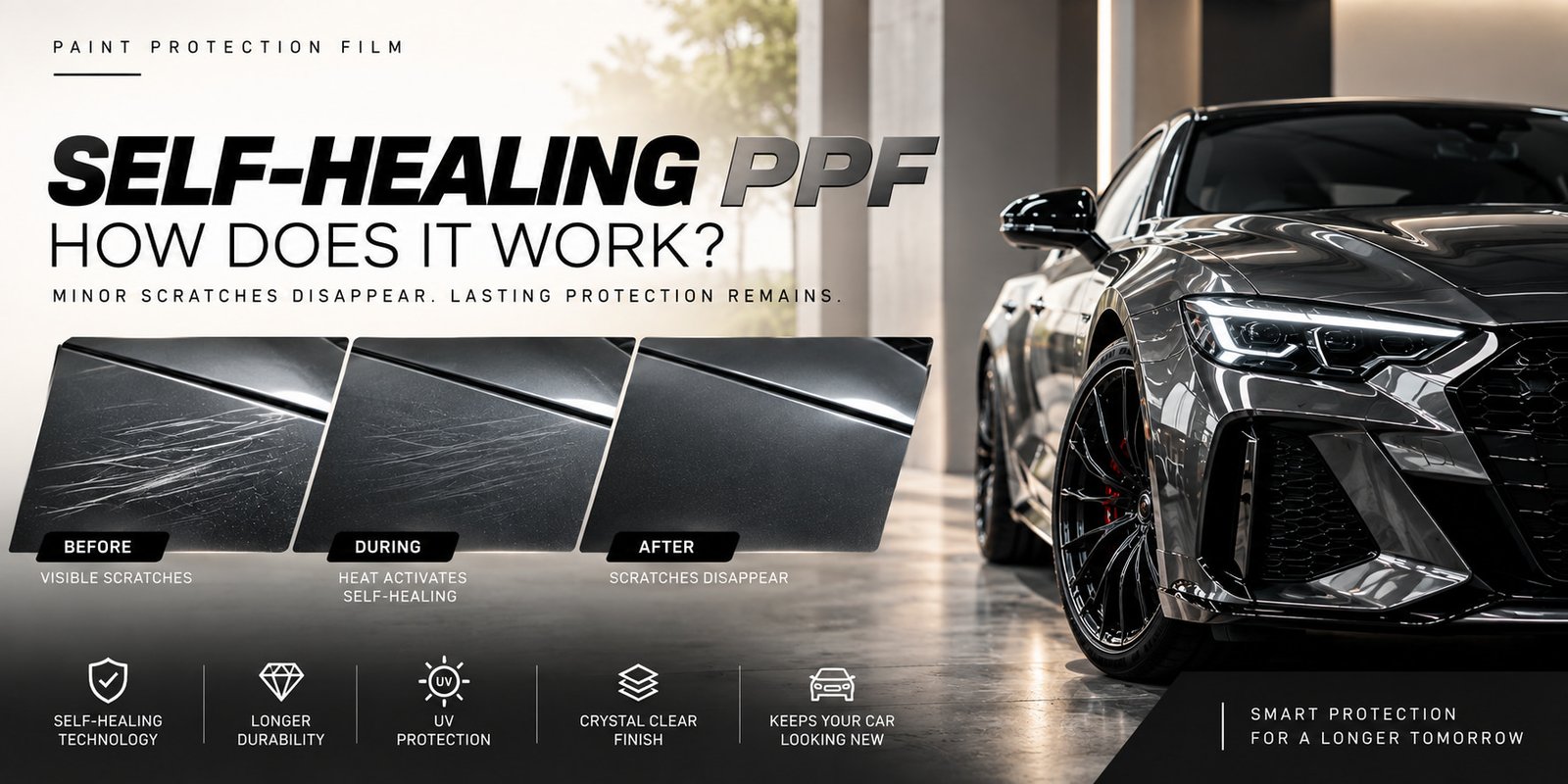
What Is Self-Healing PPF?
Self-healing PPF is an advanced type of Paint Protection Film that features a specialized top layer designed to recover from certain minor surface scratches and swirl marks.
When the surface of the film receives a light scratch or fine swirl, suitable heat can help the top layer return toward its original smooth appearance. This allows the protective film to continue looking clear, glossy and well maintained.
Important:
Self-healing PPF is designed mainly for minor surface marks. Deep cuts,
severe scratches or damage that penetrates through the film may not
self-heal and can require professional inspection or film replacement.
How Does Self-Healing PPF Work?
The self-healing process is mainly related to the film's specialized top coating. When minor surface damage affects this layer, heat can activate the material and allow it to gradually recover its smooth surface.
Heat may come from natural sunlight or another suitable heat source, depending on the specific PPF product and the manufacturer's instructions. The exact self-healing performance can vary between different films and product technologies.
What Kind of Scratches Can Self-Healing PPF Repair?
Self-healing PPF is primarily designed to address light surface scratches, fine swirl marks and minor surface imperfections. These types of marks can occur during routine washing, drying or everyday vehicle use.
It is important to understand that self-healing does not mean the film can repair every type of physical damage. Deep scratches, cuts, punctures and damage that reaches through the protective layers may require professional repair or replacement.
How Does Self-Healing PPF Repair Minor Scratches?
The self-healing effect comes from the specialized top layer of the protective film. When a light scratch or fine swirl mark affects the surface, the material can respond to heat and gradually return toward its original smooth condition.
This process does not remove the physical damage from the vehicle's paint. Instead, the PPF top layer helps reduce the visible appearance of minor surface marks while continuing to protect the paint underneath.
What Role Does Heat Play in Self-Healing?
Heat is an important part of the self-healing process. Depending on the film technology, warmth can activate the properties of the top coating and help it recover from certain light surface marks.
In normal conditions, heat can come from sources such as sunlight. However, vehicle owners should always follow the specific care and heating instructions provided by the PPF manufacturer or professional installer.
Good to Know:
Self-healing performance can vary between PPF products. The type of
top coating, film construction, temperature and severity of the mark
can all affect how well a minor scratch recovers.
Self-Healing PPF Process – Step by Step
- 1. Minor surface mark: A light scratch, swirl or fine surface imperfection appears on the outer layer of the PPF.
- 2. Heat reaches the film: Suitable heat warms the affected area of the protective film.
- 3. Top layer responds: The specialized self-healing layer begins to recover its smooth surface characteristics.
- 4. Surface appearance improves: The visibility of the minor mark can gradually decrease as the film returns toward its smoother appearance.
Does Self-Healing PPF Protect the Paint Too?
Yes. Self-healing is only one feature of a PPF system. The main purpose of Paint Protection Film is to create a protective layer between the vehicle's original paint and everyday road conditions.
Depending on the film and installation, PPF can help protect painted surfaces from common risks such as light scratches, road debris, stone chips and other everyday surface damage. The exact level of protection depends on the product specifications and film thickness.
Benefits of Self-Healing PPF
Self-healing technology can provide an additional advantage for vehicle owners who want their protective film to maintain a cleaner appearance during everyday driving and washing. The technology is especially useful for reducing the visibility of minor surface marks.
1. Helps Reduce Minor Scratches
One of the main benefits of self-healing PPF is its ability to help reduce the appearance of certain light scratches and fine surface marks. This can help keep the film looking smoother than a conventional surface that retains every minor mark.
2. Helps Maintain a Cleaner Appearance
Daily driving, washing and drying can create fine swirl marks over time. A self-healing top layer can help minimize the visible effect of some of these marks, helping the vehicle maintain a cleaner overall appearance.
3. Protects the Original Paint
The protective film acts as a barrier over the vehicle's painted surface. Instead of minor road contact and everyday surface wear directly affecting the paint, the PPF takes much of that surface exposure.
4. Helps Maintain Gloss and Surface Finish
Many self-healing PPF products are designed with a smooth top coating that helps maintain optical clarity and surface gloss. Keeping the film free from excessive surface marks can help the vehicle continue to look well maintained.
Key Point:
Self-healing is an additional feature of PPF, not a replacement for
proper washing and maintenance. Using suitable cleaning methods still
plays an important role in keeping the film in good condition.
5. Useful for Daily-Driven Vehicles
Vehicles that are driven regularly can experience more exposure to road debris, washing marks and everyday surface contact. Self-healing PPF can help manage some of the minor surface imperfections that develop during normal use.
6. Can Reduce the Need for Frequent Surface Correction
Because the film can recover from certain minor surface marks, owners may not need to address every light swirl or scratch through traditional surface correction. However, proper maintenance and professional inspection are still important when the film has visible damage.
What Are the Limitations of Self-Healing PPF?
Although self-healing PPF offers useful technology, it is important to understand its limitations. The self-healing effect is not designed to repair every type of damage that can occur to a vehicle.
- Deep scratches: Damage that cuts deeply into the film may not self-heal.
- Knife or sharp-object cuts: Cuts that penetrate the protective layers generally require repair or replacement.
- Major physical damage: Heavy impact, punctures or severe damage cannot normally be restored through self-healing technology.
- Product differences: Self-healing performance varies between different PPF products, coatings and technologies.
For this reason, choosing the right Paint Protection Film should involve more than simply looking for the words “self-healing.” Film construction, thickness, optical clarity, top-coat technology and installation quality should also be considered.
Self-Healing PPF vs Regular PPF
Self-healing PPF and regular PPF both provide a protective layer over a vehicle's paint, but their surface technologies can be different. Self-healing films are specifically designed with a top layer that can recover from certain minor surface marks when suitable heat is applied.
Regular PPF can still provide valuable paint protection, but depending on the product, minor scratches and swirl marks may remain visible on the surface instead of recovering through a self-healing process.
Self-Healing PPF
- Designed to help reduce the appearance of certain minor scratches.
- Uses a specialized top layer with self-healing properties.
- Heat can help activate the recovery process.
- Can help maintain a smoother and cleaner-looking surface.
- Often selected by owners who prioritize appearance as well as paint protection.
Regular PPF
- Provides a protective barrier between the paint and everyday road exposure.
- May not include the same self-healing top-coat technology.
- Can still help protect against common surface damage depending on the film specification.
- Different products can offer different levels of clarity, thickness and durability.
Important:
“Self-healing” does not automatically mean that one PPF product is
better in every category. Film thickness, TPU quality, top-coat
technology, optical clarity, adhesive performance, warranty and
installation quality should all be considered.
Is Self-Healing PPF Worth It?
Whether self-healing PPF is worth considering depends on the vehicle, driving conditions, appearance preferences and the level of protection the owner wants. For drivers who are particularly concerned about fine scratches and washing-related swirl marks, the self-healing feature can provide an additional benefit.
It can be especially useful on vehicles where maintaining a clean, glossy appearance is important. The technology can help reduce the visibility of minor surface marks while the film continues to provide protection for the paint underneath.
Who Should Consider Self-Healing PPF?
- Owners of new vehicles who want to maintain the factory paint finish.
- Daily drivers exposed to regular road and washing conditions.
- Owners who want to reduce the appearance of minor swirl marks.
- Luxury and premium vehicle owners who prioritize exterior appearance.
- Drivers looking for long-term paint protection with additional surface-healing technology.
Choosing the Right Self-Healing PPF
When comparing self-healing PPF products, do not focus only on the self-healing feature. Check the film's thickness, material construction, optical clarity, top-coat performance, adhesive quality, warranty and installation standards.
A high-quality film installed correctly can provide a better overall result than simply choosing a product based on one feature. Professional preparation and installation are important parts of the complete Paint Protection Film system.
How Long Does Self-Healing PPF Last?
The lifespan of self-healing PPF depends on the quality of the film, installation, vehicle usage, environmental exposure and maintenance. Different PPF products can have different expected service lives and warranty periods.
The self-healing feature itself can also vary between products. A high-quality film with a durable top coating may continue to provide its intended surface performance for many years when it is properly installed and maintained.
Factors That Affect Self-Healing PPF Lifespan
- Film quality: The material and construction of the PPF can affect its durability and long-term performance.
- Top-coat technology: The quality and durability of the self-healing surface layer can influence how it performs over time.
- Sun exposure: Long-term exposure to sunlight and environmental conditions can affect the appearance and performance of automotive films.
- Maintenance: Correct washing and care can help preserve the film's surface condition.
- Installation quality: Proper preparation, fitting and edge finishing can have an important effect on the overall life of the installation.
Important:
Always check the specific manufacturer's warranty and care
instructions for the PPF being installed. Warranty duration and
recommended maintenance can vary between products.
How to Maintain Self-Healing PPF
Proper maintenance is important for keeping self-healing PPF looking clear, smooth and clean. Although the film is designed to provide protection, it should still be treated carefully during regular washing and cleaning.
Wash the Vehicle Regularly
Regular washing helps remove road dust, dirt and other contaminants before they remain on the film for long periods. Use a suitable automotive wash method recommended for the specific PPF product.
Avoid Harsh Chemicals
Strong chemicals, abrasive cleaners and unsuitable products can potentially affect the film's surface. Always follow the film manufacturer's recommended cleaning products and procedures.
Use Soft Washing Materials
Soft microfiber towels and appropriate washing tools can help reduce unnecessary surface friction during cleaning. Avoid using abrasive materials directly on the PPF.
Be Careful Around Film Edges
High-pressure water and aggressive cleaning around exposed edges can increase the risk of lifting or contamination. Washing should be done carefully, particularly around panel edges and seams.
Allow New PPF to Cure Properly
Newly installed PPF needs time to settle and cure. The exact curing requirements can vary by product and installation conditions, so the installer’s aftercare instructions should always be followed before washing or performing other maintenance.
For a complete maintenance routine, vehicle owners can also follow a dedicated Paint Protection Film care and washing guide.
Self-Healing PPF for Different Types of Cars
Self-healing PPF can be used on many different types of vehicles, including daily-driven cars, luxury vehicles, SUVs and performance cars. The right coverage depends on how the vehicle is used, which areas are most exposed and the owner's protection goals.
Self-Healing PPF for New Cars
New vehicles often have clean factory paint, making paint protection particularly useful from the beginning of ownership. Installing PPF early can help reduce exposure to road debris, light scratches and everyday surface wear.
For owners who want to maintain the appearance of a new vehicle, self-healing technology can provide an additional benefit by helping reduce the visibility of certain minor surface marks.
Self-Healing PPF for Daily-Driven Cars
Daily-driven vehicles experience regular exposure to road conditions, dust, washing and parking environments. Fine marks can gradually appear on frequently touched or washed surfaces.
A self-healing film can help manage some of these minor surface imperfections while providing the underlying paint with an additional protective barrier.
Self-Healing PPF for Luxury Cars
Luxury and premium vehicles often require extra attention to exterior appearance. Owners may choose self-healing PPF because maintaining optical clarity, gloss and a clean surface is an important part of keeping the vehicle looking its best.
Self-Healing PPF for SUVs
SUVs can have large painted panels and are commonly used for both city and highway driving. High-exposure areas such as the front bumper, bonnet, fenders and mirrors can be considered for PPF coverage.
Coverage Tip:
Self-healing PPF does not always need to cover the entire vehicle.
Partial coverage can focus protection on high-impact areas, while
full-car PPF provides a broader protective layer across the painted
exterior.
Where Is Self-Healing PPF Most Useful?
The most exposed areas of a vehicle are generally the places where protective film can provide the greatest practical benefit. These areas can experience more road debris, surface contact and washing-related marks.
- Front bumper: Frequently exposed to road debris and small impacts.
- Bonnet: Can receive stone chips, road dust and other highway debris.
- Front fenders: Exposed to road contamination and surface wear.
- Side mirrors: Can experience small surface marks and environmental exposure.
- Door edges and handles: Can receive repeated contact during everyday vehicle use.
- Lower painted panels: May receive additional road dirt and debris depending on driving conditions.
Full-Car vs Partial Self-Healing PPF
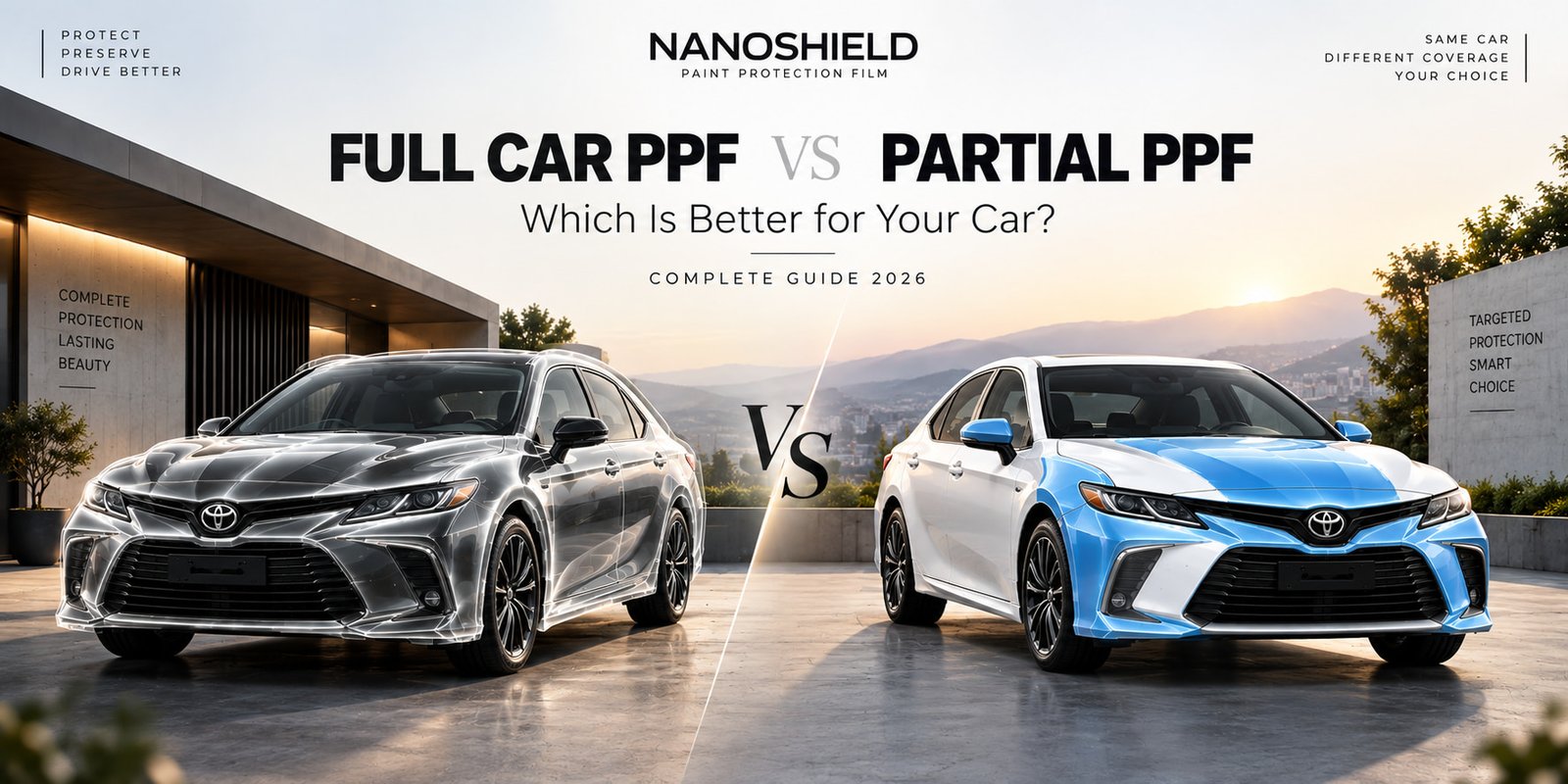
Full-car PPF applies protective film across a much larger portion of the vehicle's painted exterior, while partial PPF focuses on selected high-exposure areas.
The choice depends on the vehicle, budget, driving habits and desired level of coverage. Owners who want broader paint protection may consider full-car coverage, while partial coverage can be suitable when the priority is protecting specific high-risk areas.
To understand the difference between these coverage options in more detail, see our guide to Paint Protection Film coverage.
Self-Healing PPF and Car Washing
Proper washing is important for maintaining the appearance and performance of self-healing PPF. Although the film is designed to recover from certain minor surface marks, aggressive washing methods can still create unnecessary stress on the film surface.
Use a Safe Washing Method
A gentle automotive washing method with suitable microfiber materials can help reduce unnecessary friction. Dirt should be removed carefully rather than aggressively rubbing the surface of the film.
Avoid Abrasive Cleaning Products
Abrasive compounds, rough cleaning pads and unsuitable polishing products should not be used on PPF unless they are specifically approved for the particular film. Always follow the product manufacturer's care instructions.
Can You Pressure Wash Self-Healing PPF?
Pressure washing may be possible with some PPF installations, but the pressure, distance and technique matter. Directing high-pressure water too closely at film edges or seams can increase the risk of lifting.
Important:
Always follow the installation provider's aftercare instructions
before using a pressure washer. Newly installed PPF may require a
curing period before washing.
Can You Polish Self-Healing PPF?
Traditional paint polishing is not automatically suitable for every PPF product. Abrasive polishing can affect the film's top coating and may reduce its intended surface characteristics.
If the film has visible marks or contamination that cannot be removed through normal washing, it is better to consult the installer or film manufacturer before using a polishing or correction product.
Common Mistakes That Can Affect Self-Healing PPF
Even a high-quality self-healing film can be affected by improper maintenance or installation. Avoiding common mistakes can help preserve the appearance and service life of the protective film.
- Using rough towels: Coarse materials can create unnecessary friction on the film.
- Using harsh chemicals: Unsuitable cleaning chemicals may affect the film's surface.
- Ignoring film edges: Aggressive cleaning around edges can increase the risk of lifting.
- Improper pressure washing: Very high pressure or close spraying can damage vulnerable areas.
- Using unapproved polish: Abrasive products may not be compatible with the PPF's top coating.
- Delaying professional inspection: Deep cuts, lifting or damaged areas should be inspected rather than repeatedly cleaned or rubbed.
How to Keep Self-Healing PPF Looking Its Best
Regular gentle washing, suitable cleaning products and careful handling can help maintain the film's clarity and surface finish. Keeping the vehicle clean also makes it easier to identify genuine scratches, contamination or areas that may require professional attention.
For a complete maintenance routine, see our Paint Protection Film maintenance and washing guide.
Self-Healing PPF Price – What Affects the Cost?
The price of self-healing PPF can vary significantly depending on the vehicle, coverage, film specification, installation quality and warranty. There is no single price that applies to every car because different vehicles require different amounts of film and installation work.
Compared with basic protective films, advanced self-healing PPF can cost more because of its specialized top-coat technology, material construction and additional performance features.
1. Film Quality
The quality of the PPF is one of the most important factors affecting the overall price. Different films can vary in material quality, optical clarity, adhesive performance, top-coat technology and durability.
2. PPF Thickness
Film thickness can also influence the price. Different PPF products are available in different thickness levels, and the appropriate thickness depends on the intended protection, product construction and vehicle requirements.
3. Coverage Area
Partial PPF generally requires less material and installation time than full-car coverage. A full-body installation therefore normally involves a larger overall investment than protecting only selected high-impact areas.
- Partial PPF: Selected high-exposure panels such as the bumper, bonnet, fenders or mirrors.
- Front-end PPF: A broader package focused on the front portion of the vehicle.
- Full-car PPF: Protective film installed across most or all painted exterior panels.
4. Vehicle Size and Body Design
A larger SUV, luxury vehicle or vehicle with complex body contours may require more film and additional installation work compared with a smaller car. Curves, sharp edges, vents and difficult panel shapes can also affect installation complexity.
5. Paint Condition and Preparation
The condition of the vehicle before installation can affect the total cost. A vehicle with contamination, scratches, stains or paint imperfections may require additional preparation before the film can be installed properly.
Important:
A low PPF quotation should not automatically be considered a better
deal. Before comparing prices, confirm the exact film specification,
coverage, preparation, installation method and warranty included in
the package.
6. Installation Quality
Professional installation requires careful surface preparation, accurate pattern fitting, controlled application and clean finishing. Experienced installation can also reduce visible edges, contamination and application-related issues.
7. Warranty and Aftercare
Warranty terms can also be reflected in the overall package price. Different PPF products may offer different warranty periods and conditions, so the warranty should be checked together with the film specification rather than viewed separately.
How to Compare Self-Healing PPF Prices
When comparing quotes, look at the complete package rather than choosing a film based only on its price. Two installers may quote different amounts because their films, coverage and installation standards are not identical.
- Check the exact PPF product and thickness.
- Confirm whether the film has a self-healing top coating.
- Ask exactly which panels are included.
- Confirm whether paint preparation or correction is included.
- Ask about installation and edge-finishing standards.
- Check the written warranty and aftercare requirements.
For a broader understanding of PPF pricing, you can also review our Paint Protection Film price guide for Lahore.
How to Choose the Best Self-Healing PPF for Your Car
Choosing a self-healing PPF should involve more than simply looking at the price or the words “self-healing.” Different products can vary in film construction, thickness, clarity, top-coat technology, warranty and installation requirements.
Before choosing a product, consider how the vehicle is used, which areas need protection and what level of long-term appearance and protection you expect from the film.
1. Check the PPF Material
The material used in the film is an important consideration. Quality PPF is generally designed to provide a combination of protection, flexibility, clarity and durability. Ask the installer for the exact product specification rather than relying only on general marketing terms.
2. Check the Film Thickness
PPF is available in different thickness levels. Thickness can influence the film's protective characteristics, appearance and installation behavior. The correct option should be selected according to the product specification and the vehicle's requirements.
3. Look at the Self-Healing Top Coat
Since self-healing performance depends heavily on the film's surface technology, ask how the top coat is designed to respond to minor scratches and heat. Also check the manufacturer's care instructions for maintaining that surface.
Buying Tip:
Do not choose a PPF only because it is advertised as “self-healing.”
Ask for the complete film specification, warranty details and
installation information before making a decision.
4. Check Optical Clarity
A good automotive PPF should maintain a clean and clear appearance when properly installed. Optical clarity is particularly important on glossy vehicles because poor-quality film or installation can make the finish look less natural.
5. Check Adhesive Quality
The adhesive is another important part of the PPF system. Proper adhesive performance helps the film remain securely installed while allowing professional installers to achieve clean panel coverage.
6. Check Warranty Coverage
Always read the actual warranty terms rather than relying only on a warranty number mentioned in advertising. Check what is covered, the warranty duration, exclusions and the conditions required to maintain coverage.
7. Choose an Experienced Installer
Even a high-quality PPF can produce a poor result if the installation is not performed correctly. Proper washing, decontamination, paint preparation, pattern fitting, application and edge finishing all contribute to the final appearance.
Questions to Ask Before Buying Self-Healing PPF
- What is the exact brand and product name?
- What is the film thickness?
- Does the film have a self-healing top coat?
- What type of vehicle coverage is included?
- Is paint preparation included in the installation?
- How are the film edges finished?
- What is the written warranty period and what does it cover?
- What maintenance products and washing methods are recommended?
Professional Installation Matters
Self-healing technology is only one part of a complete PPF installation. Proper surface preparation and accurate application help the film achieve the intended appearance and coverage.
For this reason, the installer should be evaluated along with the film itself. Previous installation work, preparation standards, edge finishing and aftercare support are all useful things to check before choosing a Paint Protection Film installation.
Self-Healing PPF Installation Process
The performance and appearance of self-healing PPF depend not only on the film itself but also on how correctly it is installed. Professional installation starts with proper vehicle preparation and continues through accurate film application and final inspection.
1. Vehicle Inspection
Before installation, the vehicle should be inspected for existing scratches, paint imperfections, contamination and previous repairs. This helps determine whether any preparation is required before the film is applied.
2. Thorough Washing
The vehicle is carefully washed to remove dirt, dust and road contamination from the exterior. A clean surface is important for achieving proper film contact and reducing the possibility of contamination underneath the PPF.
3. Surface Decontamination
After washing, additional surface decontamination may be required to remove bonded contaminants that ordinary washing cannot eliminate. The exact preparation method depends on the vehicle's condition and the installer's process.
4. Paint Preparation
If the paint has visible imperfections, stains or other surface issues, appropriate preparation may be recommended before applying the film. The goal is to provide a clean and suitable surface for installation.
Important:
PPF installation does not hide every paint defect. Existing scratches,
chips or imperfections may remain visible through clear film unless
they are properly addressed before installation.
5. Pattern Selection and Cutting
Professional installers may use vehicle-specific patterns to prepare the required film pieces. Accurate patterns help achieve consistent panel coverage while reducing unnecessary cuts directly on the vehicle.
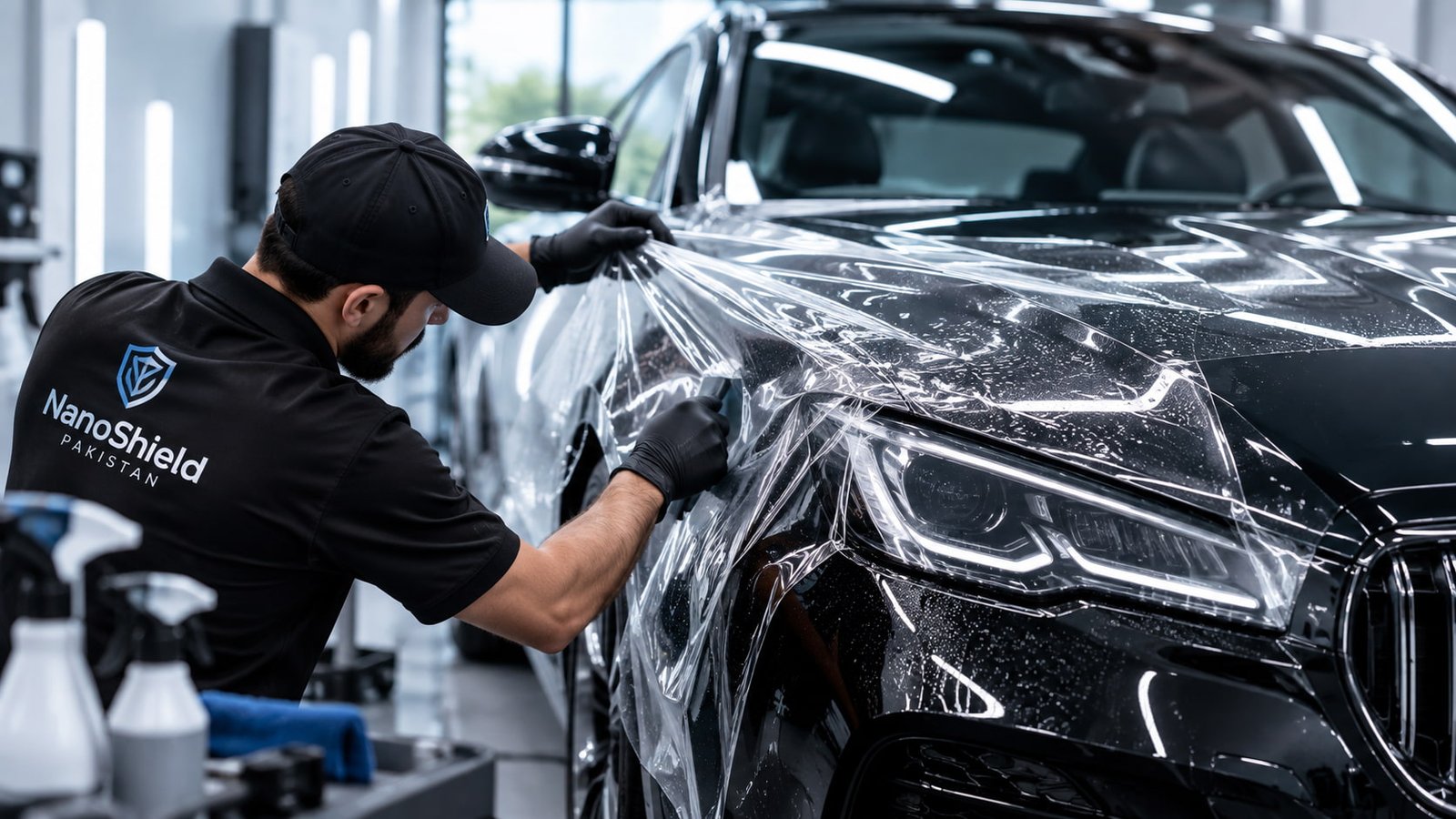
6. Film Application
The prepared PPF is carefully positioned and applied to the selected panels. The installer works gradually across the surface to control alignment, solution movement and film tension.
7. Edge Finishing
Edges and panel transitions require careful finishing to create a clean appearance. Depending on the panel and installation method, edges may be wrapped or finished in a way that reduces visible film boundaries.
8. Final Inspection
Once installation is complete, the vehicle should be inspected for alignment, bubbles, contamination, edges and overall finish. Any installation concerns should be addressed before the vehicle is handed back to the customer.
Why Professional Installation Matters
Self-healing PPF contains advanced surface technology, but the quality of the final result also depends on installation. Poor preparation, incorrect fitting or improper finishing can affect the appearance and long-term performance of the film.
- Proper surface cleaning before installation.
- Accurate panel alignment and film placement.
- Careful handling of the film during application.
- Clean and consistent edge finishing.
- Proper final inspection before delivery.
How Long Does Self-Healing PPF Installation Take?
Installation time depends on the vehicle, coverage area, film pattern, preparation requirements and installer workflow. Partial coverage can generally be completed faster than a full-car installation.
Full-car PPF may require the vehicle to remain at the installation facility for more than one day, particularly when detailed preparation, complex panels and careful finishing are involved.
For more information about installation duration, see our guide on Paint Protection Film installation time.
Self-Healing PPF Warranty and Aftercare
Warranty is an important part of choosing a self-healing PPF. However, warranty coverage can vary between manufacturers, product series and installation providers. The exact warranty terms should always be checked before installation.
A PPF warranty may cover certain film-related issues for a specified period, but conditions, exclusions and maintenance requirements can apply. The warranty should therefore be considered together with the film specification and installation quality.
What Should You Check in a PPF Warranty?
- Warranty duration: Check how long the manufacturer's warranty is valid.
- Coverage: Understand which film-related issues are covered.
- Exclusions: Check which types of damage or conditions are excluded.
- Maintenance requirements: Some warranty conditions may require proper care and maintenance.
- Installation requirements: Confirm whether the warranty depends on professional installation or an authorized installer.
Important:
A warranty does not mean that the film is immune to damage. Deep cuts,
accidents, severe physical impact, improper maintenance and other
excluded conditions may not be covered. Always read the actual
warranty terms for the specific product.
Self-Healing PPF Aftercare Tips
Proper aftercare helps maintain the appearance and performance of the film. After installation, the vehicle should be treated according to the installer's curing and maintenance instructions.
Follow the Initial Curing Instructions
Newly installed PPF may require a curing period before normal washing or other maintenance activities. The exact time can vary depending on the film, installation method and environmental conditions.
Use PPF-Safe Cleaning Products
Choose cleaning products that are suitable for the specific film. Avoid aggressive chemicals, abrasive cleaners and products that are not recommended by the PPF manufacturer.
Keep the Film Clean
Regular washing helps remove dust, road contamination and other substances from the film surface. Cleaning the vehicle regularly can also make it easier to identify any genuine damage or film-related issue.
Inspect the Film Regularly
Check the film from time to time for lifting edges, deep scratches, contamination, discoloration or other visible changes. Early professional inspection can help determine whether an issue requires repair or replacement.
Keep Your Warranty Information
Keep the product name, installation details, invoice and warranty information in a safe place. Having these details available can make future warranty or aftercare discussions easier.
When Should Self-Healing PPF Be Repaired or Replaced?
Minor surface marks may be reduced through the film's self-healing properties, but more serious damage can require professional assessment. Deep cuts, punctures, major lifting or significant deterioration may not be corrected through the self-healing process.
- Deep cuts that penetrate the film.
- Large damaged or punctured areas.
- Persistent lifting around panel edges.
- Significant discoloration or deterioration.
- Damage that exposes or threatens the underlying paint.
If the film has serious damage, professional inspection is preferable to attempting aggressive cleaning, polishing or repair at home. A qualified installer can determine whether a section can be repaired or should be replaced.
For more information about the overall benefits and protection offered by Paint Protection Film on your vehicle, review the complete PPF guide before selecting a product.
Frequently Asked Questions About Self-Healing PPF
What Is Self-Healing PPF?
Self-healing PPF is a type of Paint Protection Film with a specialized top layer designed to recover from certain minor surface scratches and swirl marks when suitable heat is applied.
How Does Self-Healing PPF Work?
The specialized top layer responds to heat and can gradually recover from certain light surface marks. Heat may come from natural sunlight or another suitable source depending on the specific film and the manufacturer's instructions.
Does Self-Healing PPF Remove Deep Scratches?
No. Self-healing technology is mainly designed for minor surface marks. Deep scratches, cuts, punctures and significant physical damage may require professional inspection, repair or film replacement.
Does Self-Healing PPF Protect Car Paint?
Yes. PPF creates a protective layer over the painted surface and can help reduce exposure to common road debris, light scratches and other everyday surface damage. The exact level of protection depends on the film specification and installation.
Is Self-Healing PPF Better Than Regular PPF?
Self-healing PPF offers an additional surface-healing feature that may not be available in every regular PPF product. However, the right film depends on factors such as material, thickness, protection requirements, appearance, warranty and budget.
Remember:
“Self-healing” is one feature of a PPF product. Film quality,
installation quality, coverage and proper maintenance should also be
considered when comparing different options.
Can Self-Healing PPF Heal in Sunlight?
Some self-healing PPF products can use heat from sunlight to help activate the surface-healing process. The exact temperature, conditions and performance depend on the specific product, so the manufacturer's instructions should always be followed.
Can You Wash a Car With Self-Healing PPF?
Yes. Self-healing PPF can be washed, but the vehicle should be cleaned using methods and products suitable for the film. Avoid abrasive materials and aggressive cleaning around exposed film edges.
How Long Does Self-Healing PPF Last?
The expected service life varies according to the film, installation, environmental exposure, vehicle usage and maintenance. Always check the specific product warranty and manufacturer's recommendations.
Is Self-Healing PPF Good for Daily-Driven Cars?
It can be useful for daily-driven vehicles because these cars are regularly exposed to road debris, washing and everyday surface wear. The self-healing feature can help reduce the appearance of certain minor marks that develop during normal use.
Can Self-Healing PPF Be Installed on Any Car?
Self-healing PPF can be installed on many types of vehicles, including sedans, hatchbacks, SUVs, luxury cars and performance vehicles. Coverage and installation requirements depend on the vehicle's design and the selected PPF product.
Is Full-Car Self-Healing PPF Necessary?
Not necessarily. Some owners choose partial coverage for high-exposure areas, while others prefer full-car protection. The appropriate option depends on the vehicle, driving conditions, budget and desired level of paint protection.
What Should I Check Before Buying Self-Healing PPF?
Check the exact product name, material, thickness, self-healing technology, optical clarity, warranty, coverage and installation quality. It is also useful to ask about maintenance requirements and aftercare support before installation.
Final Thoughts: Is Self-Healing PPF Worth It?
Self-healing PPF is designed to provide paint protection while helping the film recover from many minor surface scratches and swirl marks. Its self-healing top coat can improve the appearance of the film when exposed to suitable heat, helping the vehicle maintain a cleaner and more polished appearance.
However, self-healing technology does not mean that every type of damage disappears automatically. Deep scratches, cuts, punctures and damage that reaches through the film may require professional inspection or replacement of the affected section.
For daily-driven cars: Self-healing PPF can be useful where the vehicle regularly experiences washing, road debris, light scratches and everyday surface marks.
For better long-term protection: Film quality, proper installation, correct maintenance and suitable warranty coverage are just as important as the self-healing feature itself.
For choosing the right protection: Always compare the film's material, thickness, top-coat technology, clarity, adhesive quality, warranty and installer experience instead of choosing only by the term "self-healing."
What Should You Check Before Buying Self-Healing PPF?
Before installing self-healing PPF, ask about the film's thickness, top-coat technology, optical clarity, adhesive performance, warranty and expected lifespan. It is also important to understand what areas will be covered and how the installation will be performed.
A professional installation can make a major difference in the final appearance. Proper surface preparation, accurate pattern installation, clean edges and careful finishing help the film look more natural on the vehicle.
If you are comparing different protection options, you can also explore our Paint Protection Film service to understand the available PPF protection options.
Self-Healing PPF for Your Car
The right PPF depends on your vehicle, driving conditions, desired coverage and maintenance habits. For some owners, self-healing technology can be an important feature because it helps reduce the visibility of minor surface marks over time.
The most important goal is to protect the original paint with a high-quality film that is properly installed and maintained. Whether you choose partial coverage or full-car protection, understanding the film's features and limitations will help you make a more informed decision.
For more information about how PPF protects vehicle paint and the different coverage options available, see our Paint Protection Film guide and service information.
Conclusion
Self-healing PPF combines paint protection with a specialized top coat that can help reduce the appearance of many minor surface scratches and swirl marks. When exposed to suitable heat, the surface can recover from certain light marks and maintain a cleaner appearance.
The technology is especially useful for vehicles that are driven regularly and exposed to everyday road conditions, washing and minor surface contact. However, self-healing PPF still has limitations and should not be considered a solution for deep cuts, punctures or severe film damage.
When selecting a film, look beyond the self-healing feature. Consider the film quality, thickness, clarity, top-coat technology, adhesive, installation quality, coverage and warranty. These factors all contribute to the overall performance and appearance of the finished installation.
If you are planning to protect your vehicle with professional Paint Protection Film , understanding these factors can help you choose a protection solution that matches your vehicle and daily driving requirements.
Protect Your Car's Original Paint
A properly selected and professionally installed PPF can help protect the original paint from everyday road damage while keeping the vehicle looking cleaner and better maintained.
Quick Checklist Before Choosing Self-Healing PPF
Before purchasing self-healing PPF, it is useful to compare the actual specifications of the film instead of relying only on marketing claims. A simple checklist can help you understand whether the film is suitable for your vehicle.
- Film thickness: Check the advertised thickness and understand what level of protection it is designed to provide.
- Self-healing top coat: Ask how the self-healing technology works and what type of minor marks it is designed to recover from.
- Optical clarity: The film should maintain a clean appearance without unnecessary haze, distortion or excessive orange peel.
- Adhesive quality: A reliable adhesive helps the film remain properly bonded when professionally installed.
- Warranty: Check the warranty period and understand exactly what is covered.
- Installation quality: Professional preparation, application and edge finishing are important for the final result.
- Maintenance requirements: Confirm the recommended washing and care procedure before installation.
- Coverage: Decide whether partial protection or full-car PPF is more appropriate for your vehicle.
Important: A self-healing feature is only one part of a PPF system. Film construction, installation quality, maintenance and warranty should all be considered when comparing different options.
For more information about professional Paint Protection Film options, you can review the available protection and coverage solutions for your vehicle.
Protect Your Car with Self-Healing PPF
Self-healing PPF is a practical paint protection solution for vehicle owners who want to protect their original paint while reducing the visibility of many minor surface scratches and swirl marks.
The self-healing technology works through the film's specialized top coat, which can respond to suitable heat and help recover certain light surface marks. At the same time, the PPF acts as a protective barrier between the vehicle's paint and everyday road hazards.
For the best results, focus on the complete PPF system rather than one feature alone. Film quality, installation, coverage, maintenance and warranty all contribute to the long-term performance and appearance of the protection.
Explore Paint Protection Film Options
Learn more about professional Paint Protection Film and explore protection options for your vehicle.
Explore PPF