
How to Choose the Right PPF for Your Car – Complete Guide 2026
Choosing the right Paint Protection Film is an important decision when you want to protect your car's original paint. With different film materials, thicknesses, finishes, technologies and warranty options available, it can be difficult to know which PPF is suitable for your vehicle.
The right PPF should provide reliable protection while maintaining the appearance of your car. However, choosing PPF is not simply about finding the thickest or most expensive film. Material quality, clarity, finish, self-healing performance, warranty and installation quality should all be considered before making a decision.
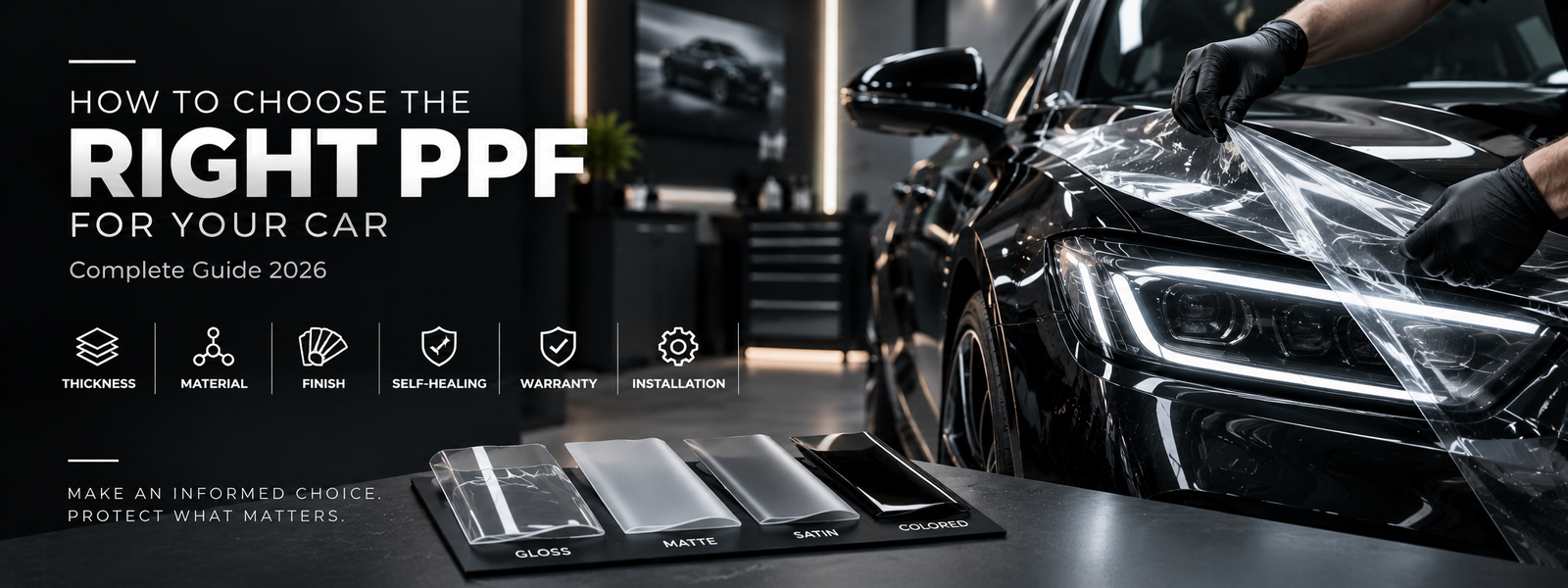
Why Is Choosing the Right PPF Important?
Not all Paint Protection Film products are made with the same materials, construction and performance characteristics. Different films can vary in clarity, flexibility, durability, finish and self-healing performance.
The quality of installation is also an important part of the overall result. Even a high-quality PPF can have appearance or performance issues if the vehicle is not properly prepared or the film is not installed correctly around curves, edges and difficult areas.
Before choosing a film, it is therefore important to consider both the quality of the PPF and the installation process. Understanding the specifications of the film can also help you compare different options more confidently.
Key Point:
The right PPF is not necessarily the thickest or most expensive film.
Compare the material, thickness, finish, clarity, self-healing
technology, warranty and installation quality before making your choice.
What Should You Check Before Choosing PPF?
Before purchasing or installing PPF, take time to compare the important specifications and services included with the film. Looking at several factors together can give you a better understanding of the overall value and expected performance.
Your choice should also depend on your vehicle, driving habits, parking conditions and the level of paint protection you want. A daily-driven car may have different requirements from a luxury vehicle that is mainly used for occasional driving.
Important Factors to Compare:
PPF material, film thickness, finish, self-healing technology, optical
clarity, adhesive quality, warranty and professional installation.
What Material Should You Look for in PPF?
One of the most important things to check when choosing Paint Protection Film is the material used to manufacture the film. The material forms the foundation of the film and can affect its flexibility, appearance, durability and ability to conform to the curves of a vehicle.
Modern automotive PPF is commonly built around Thermoplastic Polyurethane (TPU). TPU is an elastomeric polymer that can provide a combination of flexibility, toughness and optical clarity, which are important characteristics for a protective film installed on painted vehicle panels. :contentReference[oaicite:1]{index=1}
What Is TPU in Paint Protection Film?
TPU stands for Thermoplastic Polyurethane. In PPF, the TPU layer acts as the main flexible film body. It allows the film to follow the shape of vehicle panels instead of behaving like a rigid sheet.
A finished PPF product is more than just the TPU layer. Depending on the product, the film can also include a protective top coating and an adhesive layer. Each part contributes to the final appearance, installation behavior and protection of the vehicle's paint. :contentReference[oaicite:2]{index=2}
Key Point:
When comparing PPF products, do not look only at the product name or
thickness. Ask what material the film uses and what construction,
coating and adhesive system are included.
Why Is TPU Important in PPF?
TPU is widely used in automotive PPF because it can combine flexibility, elasticity, durability and optical clarity. These properties are useful when a film needs to cover curved body panels while maintaining a clean appearance. :contentReference[oaicite:3]{index=3}
A quality TPU-based film can also be designed with a surface coating that provides additional characteristics such as scratch resistance, hydrophobic behavior and self-healing of minor surface marks. The exact performance depends on the complete film construction rather than the TPU name alone. :contentReference[oaicite:4]{index=4}
Important TPU Characteristics to Check
- Flexibility: The film should be able to conform to curved and shaped vehicle panels.
- Elasticity: Good film construction allows the material to stretch during installation while maintaining its intended shape.
- Optical Clarity: A clear PPF should maintain a clean appearance without unnecessarily affecting the look of the original paint.
- UV Stability: Material chemistry and the overall film construction influence how the film behaves during long-term exposure to sunlight.
- Surface Performance: The top coating can influence gloss, stain resistance, water behavior and the ability to recover from minor surface marks.
Aliphatic TPU vs Aromatic TPU
When comparing TPU-based PPF, you may also come across the terms aliphatic TPU and aromatic TPU. These describe different chemical structures within the TPU family.
Aliphatic TPU is commonly selected for applications where long-term optical and color stability under UV exposure are important. Aromatic TPU can have different performance characteristics and may be more susceptible to UV-related yellowing over time. :contentReference[oaicite:5]{index=5}
What Should You Ask the Installer?
Before choosing a PPF, ask the installer for the actual film specifications. Confirm the material type, thickness, finish, warranty, manufacturer information and installation details instead of choosing only from a price quote.
Don't Choose PPF Material by Price Alone
Two films can look similar when they are newly installed but still have different material constructions and long-term performance characteristics. This is why the material specification should be one of the first things you check when comparing PPF options.
Once you understand the material, the next important factor is film thickness. Thickness can affect the overall construction of the film, but a higher thickness number by itself does not automatically mean that one product is better than another.
PPF Thickness: How Many Mil Should You Choose?
Another important factor when choosing Paint Protection Film is its thickness. PPF thickness is commonly discussed in mil, which is a measurement used for very thin materials.
Different PPF products are available in different thicknesses. For example, manufacturers may offer films around 7 mil, 8 mil or other thickness specifications depending on the product. XPEL's official specifications list multiple PPF products and thickness options, while its ULTIMATE PLUS technical data sheet gives a nominal thickness of approximately 7.6 mil without the release liner. :contentReference[oaicite:1]{index=1}
What Does “Mil” Mean in PPF?
A mil is a unit used to describe thickness. It is different from a millimeter. One mil equals one-thousandth of an inch, so PPF thickness specifications such as 7 mil or 8 mil refer to a very thin protective film.
When comparing two products, always check how the manufacturer defines the stated thickness. Some technical data sheets provide separate measurements for the clear coat, polyurethane layer and adhesive, as well as a nominal total thickness without the release liner.
Important:
Do not compare PPF only by the number of mils. The construction of the
film, TPU or polyurethane layer, top coating, adhesive system, clarity,
flexibility and manufacturer specifications should also be considered.
Is 7 Mil PPF Good?
PPF around the 7 mil range can be designed to provide paint protection while maintaining a relatively thin film profile. The actual performance depends on the complete construction and specifications of the product.
A thinner film can also have advantages when appearance, flexibility and installation characteristics are important. However, the thickness number alone should not be used to determine the overall quality of the film.
Is 8 Mil PPF Better?
Around 8 mil is a commonly seen specification in automotive PPF. For example, XPEL states that its ULTIMATE PLUS PPF is 8 mil thick on its current product FAQ. :contentReference[oaicite:2]{index=2}
An 8 mil film can provide a substantial protective layer while still being designed to maintain a relatively discreet appearance. However, the exact construction behind the quoted thickness is important when comparing products from different manufacturers.
What About 9 Mil PPF?
Some PPF products are offered at thicknesses above the commonly quoted 7–8 mil range. A thicker construction may be selected when the vehicle owner wants a more substantial protective layer, but thickness should still be evaluated together with the material, top coat and adhesive system.
There is therefore no universal rule that says a 9 mil film is always better than an 8 mil or 7 mil film. Product specifications and intended application should be considered before making a decision.
7 Mil vs 8 Mil vs 9 Mil PPF
7 Mil:
A thinner PPF option where flexibility, appearance and overall film
construction are important considerations.
8 Mil:
A commonly used thickness specification for automotive PPF, with
several established products available around this range.
9 Mil:
A thicker option that may appeal to owners looking for a more
substantial film layer, depending on the product's complete
construction.
Thickness Is Only One Part of PPF Quality
A high-quality PPF should be evaluated as a complete system. Material, top-coat technology, optical clarity, adhesive performance, flexibility, finish and warranty can all influence the overall result. A higher mil number by itself does not establish that one film is superior to another.
What Should You Check Besides Thickness?
- Film Material: Check whether the film uses a suitable polyurethane or TPU-based construction.
- Top Coat: Look at the surface technology and its intended characteristics.
- Optical Clarity: Clear PPF should maintain the visual appearance of the vehicle's paint.
- Flexibility: The film should be suitable for installation over the curves and contours of the vehicle.
- Adhesive: Check the manufacturer's information about adhesion and removal.
- Warranty: Review what the manufacturer's warranty actually covers and for how long.
- Installation: Professional preparation and installation are important for the final appearance and performance of the film.
Choose the Right Thickness for Your Car
When selecting PPF, do not simply choose the film with the highest thickness number. Instead, compare the complete product specifications and consider how the vehicle is used, where it is driven and what type of protection you expect.
Once the thickness has been considered, the next major decision is the finish. Gloss, matte and satin PPF can create very different visual results, so the finish should match the look you want for your vehicle.
Gloss vs Matte vs Satin PPF: Which Finish Should You Choose?
After considering the material and thickness of Paint Protection Film , the next important decision is the finish. PPF is available in different visual finishes, with gloss and satin options being common choices for automotive applications.
The finish can significantly change how your vehicle looks after installation. A clear gloss film is designed to maintain the glossy appearance of the paint, while a satin film gives the vehicle a softer, less reflective appearance. Manufacturers also offer matte and other specialized finishes depending on the product range. :contentReference[oaicite:1]{index=1}
Gloss PPF
Gloss PPF is the traditional clear-film option for vehicles with a factory gloss paint finish. Its purpose is to provide protection while keeping the original glossy appearance of the paint visible underneath.
Because the film is clear and glossy, it can be a suitable choice when you want to protect the original color and maintain the factory-style appearance of the vehicle.
Gloss PPF is generally suitable for:
Cars with factory gloss paint, owners who want to preserve the original
appearance, and vehicles where a clear and shiny finish is preferred.
Matte PPF
Matte PPF provides a non-glossy appearance and can create a more muted visual effect compared with traditional gloss PPF. It can be used on vehicles that already have matte paint or on gloss-painted vehicles when a different appearance is desired.
Matte and satin terminology can vary between manufacturers, so it is important to look at the actual product finish and manufacturer specifications before ordering.
Important:
If your vehicle has factory matte or satin paint, always confirm that
the selected PPF is specifically suitable for that type of finish.
Satin PPF
Satin PPF sits visually between a traditional glossy appearance and a fully matte look. It provides a softer sheen rather than the strong reflection associated with a high-gloss surface.
XPEL, for example, describes its STEALTH PPF as having a satin finish and states that it can preserve an existing satin appearance or transform a gloss vehicle into a satin look while providing PPF protection. :contentReference[oaicite:2]{index=2}
Satin Finish Can Change the Look of a Gloss Car
If you install a satin PPF over a gloss-painted vehicle, the vehicle's visual appearance can change from glossy to a softer satin-style look. This is an appearance decision as well as a paint-protection decision, so make sure you are happy with the finish before installation. :contentReference[oaicite:3]{index=3}
Gloss vs Matte vs Satin PPF
Gloss PPF:
Designed to maintain a glossy, clear appearance and is commonly chosen
for vehicles with factory gloss paint.
Matte PPF:
Provides a non-glossy appearance and can create a more understated,
low-reflection look.
Satin PPF:
Provides a softer sheen between gloss and matte and can give a gloss
vehicle a satin-style appearance.
Should You Match the Factory Paint Finish?
If your car has factory gloss paint and you want to preserve its original appearance, clear gloss PPF is the straightforward option to consider. If your vehicle already has a satin or matte finish, the selected film should be compatible with that surface and should be evaluated for its intended application.
For a gloss vehicle, choosing satin PPF is more of a styling decision because the film can change the appearance of the original paint. Therefore, consider how you want the car to look after installation, rather than selecting a finish based only on the name or price.
What Should You Check Before Choosing a PPF Finish?
- Factory Paint: Check whether your vehicle has gloss, satin or matte paint.
- Desired Appearance: Decide whether you want to preserve the original look or change it.
- Product Specification: Check the manufacturer's description of the exact finish.
- Color: Consider how the selected finish will look with your vehicle's paint color.
- Maintenance: Follow the manufacturer's recommended care instructions for the selected film.
- Installation: Use an experienced installer who understands the handling requirements of the selected finish.
Choose the Finish That Matches Your Car
There is no single finish that suits every vehicle. Gloss, matte and satin PPF can create different visual results, so the right choice depends on the existing paint finish and the appearance you want after installation.
Once you have selected the finish, the next important feature to understand is self-healing technology. This technology is designed to help certain minor surface marks recover under appropriate conditions and is an important specification to compare between PPF products.
Self-Healing PPF: What Is It and How Does It Work?
Self-healing technology is one of the features many car owners look for when choosing Paint Protection Film . The technology is designed to help certain minor surface scratches and swirl marks recover over time, helping the film maintain a cleaner appearance.
Self-healing is generally associated with the film's top coating. Some modern PPF products use elastomeric polymers in the clear coat that allow minor surface marks to recover when the film is exposed to suitable heat. XPEL, for example, describes its PPF as using an advanced self-healing topcoat for light scratches and swirl marks. :contentReference[oaicite:1]{index=1}
What Does Self-Healing Mean in PPF?
Self-healing does not mean that the entire film can repair every type of damage. Instead, it refers to the ability of the film's surface layer to recover from certain minor marks.
Light scratches and fine swirl marks can sometimes become less visible when the topcoat receives appropriate heat. The exact behavior depends on the specific PPF product and its manufacturer instructions.
Important:
Self-healing PPF is designed primarily for minor surface damage. Deep
scratches, cuts or damage that penetrates through the film cannot
normally be expected to disappear through self-healing alone.
How Does Self-Healing PPF Work?
The self-healing effect comes from the properties of the film's surface coating. When a minor mark affects the top layer, suitable heat can allow the coating's polymer structure to recover and reduce the visibility of the mark.
Depending on the product, this heat can come from direct sunlight or another suitable heat source. XPEL describes sunlight and heat activation as part of the self-healing behavior of its PPF products. :contentReference[oaicite:2]{index=2}
Can Sunlight Activate Self-Healing?
Some self-healing PPF products are designed to use heat from sunlight to help minor scratches and swirl marks recover. This can be particularly useful because normal exposure to sunlight can provide heat to the vehicle's exterior surface.
However, the required conditions and healing behavior vary between products. Always follow the manufacturer's recommended care and activation instructions rather than assuming every self-healing film behaves in exactly the same way.
What Can Self-Healing PPF Help With?
Self-healing technology is intended for minor surface imperfections such as light scratches and fine swirl marks. It can help the film maintain a smoother-looking surface during normal vehicle use. :contentReference[oaicite:3]{index=3}
What Can Self-Healing PPF NOT Repair?
Self-healing should not be considered a replacement for repairing serious physical damage. If a scratch is deep enough to cut through the film, the self-healing topcoat cannot restore the missing material.
- Deep scratches: Damage that penetrates deeply into the film may remain visible.
- Cuts: A cut or tear through the film cannot normally be repaired by the self-healing topcoat.
- Impact damage: Rock chips or significant impact damage may require professional inspection and film replacement.
- Damaged film: If the film itself has been seriously damaged, replacement of the affected section may be necessary.
Self-Healing PPF vs Standard Protective Film
The main difference is the surface technology. Self-healing PPF uses a topcoat designed to recover from certain minor surface marks, while a conventional protective film without self-healing technology does not provide the same type of surface recovery.
When comparing two films, therefore, check the manufacturer's technical information to understand exactly what the self-healing technology is designed to handle.
What Should You Check When Buying Self-Healing PPF?
- Self-Healing Technology: Confirm that the product specifically includes a self-healing topcoat.
- Activation Method: Check whether the manufacturer specifies sunlight, heat or another method for activating the healing effect.
- Scratch Limitations: Understand that self-healing is intended for minor surface marks, not deep cuts.
- Topcoat Quality: The surface coating is an important part of the self-healing system.
- Manufacturer Specifications: Read the product's technical information rather than relying only on marketing claims.
- Installation: Choose an installer who understands the film's handling and installation requirements.
Is Self-Healing PPF Worth Considering?
Self-healing technology can be a useful feature for vehicle owners who want the film's surface to remain cleaner-looking after normal use. However, it should be viewed as one part of the overall PPF specification rather than the only factor that determines film quality.
After checking self-healing technology, the next important factor is optical clarity and appearance. A high-quality clear film should protect the paint while keeping the vehicle's original appearance looking natural.
PPF Optical Clarity: Why Appearance Matters
When choosing Paint Protection Film , protection is not the only thing that matters. The film is installed directly over the vehicle's paint, so its optical clarity and surface appearance can have a major effect on how the finished car looks.
A good clear PPF should allow the original paint color and finish to remain visually clear. Manufacturers commonly describe premium clear PPF as optically clear or designed to maintain the appearance of the vehicle's paint. :contentReference[oaicite:1]{index=1}
What Does Optical Clarity Mean in PPF?
Optical clarity refers to how clearly you can see the original paint underneath the film. A clear PPF should look as natural as possible after installation rather than making the paint appear unnecessarily cloudy, distorted or visually different.
This becomes especially important on black, dark-colored and metallic vehicles because reflections and surface imperfections can be easier to notice.
Key Point:
Do not judge PPF quality only by looking at the film roll. Check an
actual installed sample or vehicle whenever possible so you can see how
the film affects the paint's appearance.
What Is Haze in PPF?
Haze is a cloudy or slightly foggy appearance that can reduce the visual clarity of a transparent film. On a high-quality clear PPF installation, the goal is to keep the protected paint looking clean and natural.
Temporary visual changes can sometimes occur immediately after installation because the film and adhesive are still settling. Proper installation and curing time are therefore important before making a final judgment about the finished appearance.
What Is Orange Peel in PPF?
Orange peel refers to a textured appearance on a surface that can make reflections look less smooth. Since PPF is installed over the vehicle's paint, the visual quality of the film and installation can influence how smooth the finished surface appears.
Some degree of surface texture can vary between films, finishes and installations. For this reason, it is useful to inspect a real installed panel instead of judging the product only from photographs or packaging.
Clear PPF Should Protect Without Hiding the Paint
The purpose of clear PPF is to create a protective layer over the paint while keeping the vehicle's original appearance visible. Product construction, clearcoat technology and professional installation all contribute to the final visual result. :contentReference[oaicite:2]{index=2}
Why Is Clarity Especially Important on Black Cars?
Black paint can make surface reflections and imperfections particularly noticeable. Marks, dust, water spots and changes in surface texture may stand out more clearly on a dark glossy finish.
If you have a black car, inspect a real installed example of the PPF before installation. Look at the panel from different angles and under different lighting conditions to understand how the film affects the appearance.
Does PPF Change the Original Paint Color?
Clear PPF is designed to remain transparent so that the original paint color can remain visible. However, the final visual appearance can depend on the film's finish, surface coating, installation quality and condition of the underlying paint.
Gloss PPF is generally intended to maintain a glossy appearance, while satin or matte PPF can intentionally change the visual character of the paint. XPEL, for example, describes its regular PPF as clear and its STEALTH film as a satin finish. :contentReference[oaicite:3]{index=3}
How to Check PPF Clarity Before Installation
- View a Real Sample: Look at an actual installed section rather than relying only on product photos.
- Check Under Strong Lighting: Inspect the surface under studio or daylight conditions.
- Look at Reflections: Check whether reflections appear smooth and natural.
- Check Different Angles: Move around the panel and inspect the film from several viewing angles.
- Compare With Unprotected Paint: If possible, compare an unprotected panel with a PPF-covered panel.
- Ask About the Product: Request the manufacturer's technical information for the exact PPF being installed.
Installation Quality Also Affects Appearance
Even a well-designed PPF can look poor if the installation is not carried out correctly. Surface preparation, film positioning, stretching, solution management and edge finishing can all influence the final appearance.
This is why you should evaluate both the film and the installer when choosing PPF. A product specification tells you about the film, while a real installation shows you how that film looks when applied to a vehicle.
Choose PPF That Looks Natural on Your Car
Optical clarity should be one of the main factors you consider when comparing clear PPF products. The ideal result is a film that provides protection while keeping the vehicle's paint looking clean, clear and natural.
After checking clarity and appearance, the next important factor is the adhesive quality. The adhesive affects how the film bonds to the vehicle and can influence installation, edge performance and removal.
PPF Adhesive Quality: Why Is It Important?
After checking material, thickness, finish, self-healing and optical clarity, the next important factor when choosing Paint Protection Film is the adhesive system.
The adhesive is the layer that bonds the film to the vehicle's surface. Its performance can affect how the film installs, how well it stays in place and how it behaves around curves, contours and edges.
Modern PPF products can use specially formulated acrylic adhesives. For example, XPEL's ULTIMATE PLUS technical data sheet describes an ultra-clear acrylic adhesive designed for strong adhesion while also resisting disturbance during installation and supporting clean removal. :contentReference[oaicite:1]{index=1}
What Is the Adhesive Layer in PPF?
PPF is made from multiple layers, and the adhesive is the part that connects the film to the vehicle's paint surface. The adhesive needs to provide sufficient bonding while allowing the installer to position and work with the film during installation.
The exact adhesive formulation differs between manufacturers and products. Therefore, when comparing films, it is better to review the manufacturer's technical information instead of assuming that all PPF adhesives perform in exactly the same way.
Key Point:
Good PPF adhesion is not simply about making the film stick as strongly
as possible. The adhesive should be designed for reliable bonding,
proper installation and appropriate removal according to the
manufacturer's specifications.
Why Is Surface Preparation Important?
Even a quality adhesive cannot perform correctly if the installation surface contains wax, oil, dirt, dust or other contaminants. Proper surface preparation helps create a clean surface for the adhesive to bond with.
XPEL's panel preparation guidance specifically describes cleaning and removing residues and contaminants before installation to support proper bonding. :contentReference[oaicite:2]{index=2}
Adhesive Quality + Proper Preparation
The final result depends on both the film's adhesive system and the condition of the surface being protected. A professional installation should begin with appropriate cleaning and preparation before the film is applied.
Why Is Adhesive Important Around PPF Edges?
Edges and difficult contours can be more challenging areas during PPF installation. The film needs to conform to the vehicle's shape and remain properly bonded after installation.
XPEL provides a dedicated surface-preparation product for hard contours and difficult edges, describing it as an adhesive promoter that can increase tack where additional adhesion is required. :contentReference[oaicite:3]{index=3}
This shows why professional installation techniques and correct preparation are important when dealing with complex curves and edges.
What Causes PPF Edge Lifting?
Edge lifting can occur for different reasons, including installation conditions, surface contamination, insufficient bonding or later exposure to aggressive cleaning methods.
High-pressure water directed directly at film edges can also contribute to lifting or damage. XPEL specifically advises avoiding high-pressure water sources near PPF edges. :contentReference[oaicite:4]{index=4}
Important:
If you notice an edge beginning to lift, do not repeatedly pressure-wash
the area or pull the film yourself. Have the affected area inspected by
a professional installer.
Can Poor Adhesive Performance Cause Bubbles?
Bubbles and visible installation marks can have several possible causes. They may be related to installation technique, trapped moisture or air, surface preparation, curing conditions or the behavior of the particular film.
Therefore, a visible bubble should not automatically be described as an adhesive defect. A professional installer should inspect the area and determine the actual cause.
What About PPF Removal?
A quality PPF adhesive should be designed not only to hold the film in place but also to allow appropriate removal according to the manufacturer's instructions.
XPEL states that its ULTIMATE PLUS adhesive is formulated to resist delamination and to remove without damaging paint or leaving adhesive residue when properly removed. :contentReference[oaicite:5]{index=5}
XPEL also recommends professional removal. Its published instructions describe using steam to keep the film pliable and removing it at a shallow angle so the adhesive comes away with the film. :contentReference[oaicite:6]{index=6}
What Should You Check About PPF Adhesive?
- Manufacturer Information: Ask for the technical information available for the exact film.
- Surface Preparation: Confirm that the vehicle will be properly cleaned and prepared before installation.
- Edge Performance: Ask how the installer handles difficult contours and edges.
- Installation Method: Make sure the installer follows the film manufacturer's recommended application process.
- Removal: Check whether the product is designed for appropriate professional removal.
- Warranty: Review whether adhesive-related problems such as peeling or bubbling are covered under the product warranty.
Don't Ignore Adhesive Quality
The adhesive layer is an important part of the overall PPF system. Film material, topcoat and thickness may receive more attention, but the adhesive also plays an important role in installation and long-term performance.
Once you have checked the adhesive and installation quality, the next major factor to review is the PPF warranty. A warranty can explain what the manufacturer covers and what conditions or exclusions apply to the product.
PPF Warranty: What Does a PPF Warranty Cover?
Warranty is another important factor to consider when choosing Paint Protection Film . A warranty can provide coverage for certain product or manufacturing defects, but the exact terms depend on the manufacturer, product, installation requirements and warranty conditions.
This is why you should never choose a PPF simply because an installer says that it has a long warranty. Ask for the actual warranty terms and check exactly what is covered, what is excluded and what conditions must be met to keep the warranty valid.
Important:
PPF warranty periods are not the same for every product. For example,
current manufacturer information shows different warranty periods
across PPF ranges, so always verify the warranty for the exact film
being installed.
What Does a PPF Warranty Actually Mean?
A PPF warranty generally relates to defects or performance problems that are covered by the manufacturer's written warranty. Depending on the product, covered issues may include conditions such as yellowing, cracking, blistering, bubbling or delamination caused by a covered product defect.
For example, XPEL's current warranty information for ULTIMATE PLUS and STEALTH PPF lists yellowing, cracking, blistering and delamination among covered manufacturing defects, subject to the warranty's terms and exclusions. :contentReference[oaicite:1]{index=1}
How Long Does PPF Warranty Last?
Warranty duration depends on the specific PPF product. Some products carry warranties of several years, while premium product ranges may carry longer warranty periods.
For example, SunTek currently lists a 5-year limited warranty for its PPF C and PPF Matte products, while its PPF Ultra and Ultra Matte products are listed with 10-year limited warranties. :contentReference[oaicite:2]{index=2}
Don't Judge PPF by Warranty Years Alone
A longer warranty period is useful information, but it should be considered together with the film's material, construction, finish, installation requirements, care instructions and the actual conditions covered by the warranty.
What Problems Can a PPF Warranty Cover?
Exact coverage varies by manufacturer and product, but manufacturer warranties may cover certain film defects such as:
- Yellowing: Abnormal yellowing caused by a covered product defect may be included in the warranty.
- Cracking: Certain manufacturing-related cracking can be covered according to the product warranty.
- Blistering or Bubbling: Some manufacturer warranties specifically list blistering or bubbling among covered defects.
- Delamination: Separation of film layers may be covered when it results from a qualifying product defect.
- Adhesive-Related Defects: Some warranties may address specific adhesive or bonding defects, depending on the product's written terms.
What Usually Is Not Covered by PPF Warranty?
A PPF warranty is generally not an unlimited guarantee against every type of damage. Manufacturer warranties can exclude damage caused by accidents, improper care, incorrect installation, misuse, harsh chemicals, improper washing or physical damage.
XPEL's current warranty terms, for example, exclude various conditions including improper installation or handling, stains and scratches, improper wash techniques, collision or accidental damage, vandalism and certain other forms of physical or environmental damage. :contentReference[oaicite:3]{index=3}
Remember:
A warranty against manufacturing defects is different from insurance
against accidents, stone impacts, vandalism or everyday physical
damage.
Does Professional Installation Matter for Warranty?
Yes. Many PPF warranties require the product to be professionally installed according to the manufacturer's recommended procedures.
XPEL's current PPF warranty terms specify professional installation in accordance with the company's recommended method as a condition of coverage. :contentReference[oaicite:4]{index=4}
Therefore, when purchasing PPF, ask whether the installer is authorized or certified by the relevant manufacturer and keep the installation documentation for your records.
What Should You Get With Your PPF Warranty?
- Product Name: The exact PPF product or series installed on your vehicle.
- Installation Date: The date the film was installed.
- Installer Details: Name and contact information of the installer or authorized dealer.
- Warranty Terms: A copy or clear record of the manufacturer's warranty conditions.
- Coverage Information: The areas of the vehicle covered by the installed film.
- Purchase Record: Keep the invoice or receipt for future warranty verification.
How Do You Make a PPF Warranty Claim?
If you notice a possible warranty issue, contact the installer or manufacturer rather than attempting to repair or remove the film yourself.
The claim process can require proof of purchase, installation details, product information and a description or photographs of the defect. XPEL, for example, instructs customers to submit the required warranty information and defect details through its warranty process. :contentReference[oaicite:5]{index=5}
Keep Your Warranty Records Safe
Save your invoice, warranty documentation, product name, installation date and installer details. If a problem appears later, these records can make it easier to establish which product was installed and whether the issue falls within the written warranty terms.
Can Poor Maintenance Affect PPF Warranty?
It can. Warranty conditions commonly require the film to be used and maintained according to the manufacturer's instructions. Improper washing, harsh chemicals, abrasive tools or other prohibited care methods may affect warranty coverage.
For example, XPEL's care instructions recommend hand washing and advise against automatic tunnel washes and certain harsh chemicals or abrasive products. :contentReference[oaicite:6]{index=6}
PPF Warranty Checklist Before You Buy
- Confirm the exact PPF brand and product.
- Check the written warranty period.
- Ask which defects are covered.
- Read the exclusions carefully.
- Confirm installation requirements.
- Ask about warranty registration if required.
- Keep your invoice and installation records.
- Follow the manufacturer's maintenance instructions.
Choose PPF With Clear Warranty Terms
A PPF warranty can be an important part of your purchase decision, but the number of warranty years should never be the only thing you compare. Always look at the exact product, covered defects, exclusions, installation requirements and maintenance conditions.
After checking the warranty, the next step is to consider professional installation quality. Even a high-quality film needs correct preparation, application, edge finishing and curing to achieve the intended result.
Professional PPF Installation: Why Installation Quality Matters
Even the best Paint Protection Film can look poor if it is not installed correctly. The installation process affects the final appearance, edge finishing, panel coverage and overall performance of the film.
Professional installation starts before the film is placed on the vehicle. The paint surface needs to be properly cleaned and prepared, contaminants need to be removed, and the installer needs to plan how the film will be positioned on each panel.
Manufacturer installation instructions also emphasize proper surface preparation, test fitting, positioning and controlled application of the film. XPEL's current installation guidance, for example, begins with cleaning the surface, test fitting the pattern and then positioning and squeegeeing the film onto the panel. :contentReference[oaicite:1]{index=1}
Step 1: Proper Vehicle Preparation
Before PPF installation begins, the vehicle should be thoroughly cleaned. Dirt, dust, wax, oils and other contaminants can interfere with the film's bonding and final appearance.
Proper panel preparation is therefore an important part of the installation process. XPEL's panel preparation guidance specifically describes cleaning the surface and removing residues before installation so the protective film can bond properly. :contentReference[oaicite:2]{index=2}
Key Point:
A clean installation surface is one of the foundations of a good PPF
installation. The installer should not simply place film over a dirty
or contaminated panel.
Step 2: Inspect the Paint Before Installation
The condition of the vehicle's paint should be checked before the film is installed. Existing scratches, chips, dents, oxidation, repainting or other surface conditions can affect the final appearance underneath the film.
This inspection is especially important on used vehicles. The customer and installer should understand the condition of the paint before protection work begins.
Step 3: Test Fit the PPF Pattern
Before final positioning, the film pattern should be checked against the vehicle panel. Proper pattern placement helps the installer understand where the film will sit and how it will cover the panel.
XPEL's published installation instructions include test fitting the desired shape before removing the liner and positioning the film. :contentReference[oaicite:3]{index=3}
Step 4: Correct Film Alignment
Alignment is important because the film needs to follow the intended contours of the panel. Incorrect positioning can result in uneven coverage, unnecessary tension or visible edges in unwanted locations.
A skilled installer should take time to position the film correctly rather than trying to force it into place after it has already been stretched or tacked down.
Step 5: Controlled Squeegee Application
After positioning the film, the installer uses a squeegee or appropriate application tool to move the film into contact with the panel and manage the installation solution.
Controlled application helps the installer work across the panel while maintaining the intended position of the film. XPEL's installation instructions specifically describe using a squeegee to adhere the film to the surface. :contentReference[oaicite:4]{index=4}
Installation Is More Than Just Putting Film on the Car
Professional PPF installation requires preparation, positioning, controlled application and careful finishing. The final result depends on how these stages are performed, not simply on the brand name printed on the film box.
Step 6: Proper Edge Finishing
Edges and difficult contours can require additional attention because the film needs to conform to the shape of the vehicle while maintaining appropriate adhesion.
XPEL provides dedicated surface-preparation guidance for hard contours and difficult edges, showing that these areas can require specific installation techniques and preparation. :contentReference[oaicite:5]{index=5}
A professional installer should inspect the edges carefully after the main installation is completed and make sure the film is properly positioned and bonded according to the product's installation requirements.
Which Areas Require Extra Attention?
- Curved Bumpers: Complex curves require careful film positioning and controlled installation.
- Side Mirrors: Their shape can make alignment and edge finishing more demanding.
- Door Edges: Edges need careful finishing to maintain a clean appearance.
- Hood Corners: Curved corners can require precise positioning and tension control.
- Headlight Areas: Curved surfaces and visible edges make clean installation important.
- Body Contours: Deep curves and complex shapes can require additional installer skill.
What About Bubbles and Installation Marks?
Small amounts of moisture can be part of certain wet-installation processes, and the film may require time to settle and cure. However, significant trapped solution, contamination or visible installation defects should be inspected rather than ignored.
The installer should inspect the finished panels from different angles and lighting conditions to identify visible problems before the vehicle is delivered.
Step 7: Final Quality Inspection
A professional installation should include a final inspection after the film has been applied. The installer should check the panels, edges, corners and overall appearance.
XPEL's published certified installation process also describes inspecting the completed installation and performing quality control before the vehicle is returned to the customer. :contentReference[oaicite:6]{index=6}
Final Inspection Should Check:
Film alignment, edges, corners, visible contamination, surface
appearance, installation marks and overall panel coverage.
How to Choose a Good PPF Installer?
Before booking an installation, look at the installer's previous work. Ask to see real completed vehicles rather than relying only on marketing photographs.
It is also useful to ask which PPF brands and products the installer regularly works with and whether they have manufacturer training or certification where applicable. Some manufacturers provide dedicated training programs focused on PPF installation techniques and troubleshooting. :contentReference[oaicite:7]{index=7}
PPF Installer Checklist
- Clean Installation Area: The workspace should be suitable for detailed film installation.
- Proper Vehicle Preparation: Panels should be cleaned and prepared before application.
- Real Installation Portfolio: Ask to see actual completed PPF installations.
- Edge Finishing: Ask how the installer handles difficult edges and contours.
- Quality Inspection: The vehicle should be inspected before delivery.
- Warranty Documentation: Confirm what product and installation warranty documentation you will receive.
Professional Installation Can Make a Major Difference
When choosing PPF, consider the installer and the film together. A high-quality product still needs appropriate preparation, positioning, application and finishing to achieve a clean final result.
Once you have selected the film and installer, the next decision is how much of the vehicle you actually need to protect. This leads to the choice between full-car PPF and partial PPF coverage.
Full Car PPF vs Partial PPF: Which Coverage Should You Choose?
After selecting the material, thickness, finish, self-healing technology, clarity, adhesive and warranty, you also need to decide how much of your car you want to cover with Paint Protection Film .
PPF does not have to cover the entire vehicle. Manufacturers and professional installers offer different coverage options, including selected high-impact areas, partial-front packages, full-front coverage and complete vehicle protection. XPEL, for example, describes both partial-front and full-front coverage as well as full-vehicle installations. ([xpel.com](https://www.xpel.com/en-au/blog/Ferrari-F40-Spider-PPF))
Key Point:
The right coverage depends on the areas you want to protect, your
vehicle's use, your budget and how much of the original paint you want
covered.
What Is Partial PPF?
Partial PPF means applying film only to selected areas of the vehicle rather than covering every painted panel.
Commonly protected areas can include the front bumper, part of the hood, parts of the front fenders, mirrors or other high-impact areas. SunTek also describes selective protection for areas such as bumpers, fenders, mirrors and the hood. ([suntekfilms.com](https://suntekfilms.com/ap/en/paint-protection-film/clear-matte/))
Partial PPF May Include:
Front bumper, partial hood, partial front fenders, side mirrors or other selected areas depending on the package and vehicle.
What Is a Partial-Front PPF Package?
A partial-front package is designed to protect the front-facing areas that are commonly exposed to road debris while using less film than a complete full-front or full-car installation.
XPEL describes a partial-front package as covering the front bumper along with portions of the hood and front fenders. Exact coverage can vary depending on the vehicle and installer. ([xpel.com](https://www.xpel.com/en-au/blog/Ferrari-F40-Spider-PPF))
What Is Full-Front PPF?
Full-front PPF covers a larger portion of the vehicle's front end. A typical full-front package can include the complete hood, front fenders, front bumper, side mirrors and headlights, although the exact package depends on the vehicle and installer.
XPEL describes its full-front protection as covering the entire hood, fenders, front bumper, side mirrors and headlamps. ([xpel.com](https://www.xpel.com/en-au/blog/Traffic-Purple-2020-Audi-R8-Preserves-Limited-Edition-Paint-XPEL-ULTIMATE-PLUS-PPF-FUSION-PLUS-Ceramic-Coating))
Full-Front Gives Broader Front-End Coverage
If you want more of the vehicle's front-facing paint protected than a partial-front package provides, a full-front installation extends the film to additional areas such as the entire hood and fenders, depending on the selected package.
What Is Full-Car PPF?
Full-car PPF means applying protective film to most or all suitable exterior painted panels of the vehicle. It provides broader coverage than a front-only or partial installation.
Full-car coverage can be selected when the owner wants consistent protection across the vehicle rather than concentrating protection only on the front end. XPEL confirms that its PPF can be installed over the entire vehicle. ([xpel.com](https://www.xpel.com/products/ultimate-plus))
Which Areas Can Be Protected With Full-Car PPF?
- Front Bumper: Helps protect the painted front bumper surface.
- Hood: Provides coverage across the painted hood area.
- Front Fenders: Protects painted areas around the front wheels.
- Side Mirrors: Can be included because of their exposed position.
- Doors: Can be protected as part of broader vehicle coverage.
- Rockers and Lower Panels: Can be included where road debris and everyday wear are concerns.
- Rear Panels: Can also be covered when full-vehicle protection is selected.
Partial vs Full-Front vs Full-Car PPF
Partial PPF:
Protects selected areas of the vehicle and uses less film than broader
coverage options.
Full-Front PPF:
Covers a larger portion of the front end, commonly including the full
hood, front fenders, bumper, mirrors and headlights depending on the
package.
Full-Car PPF:
Provides broad protection across the vehicle's exterior painted
surfaces, with exact coverage depending on the vehicle and package.
Which Coverage Makes Sense for a Daily-Driven Car?
A daily-driven vehicle may regularly encounter road debris, insects, dust, parking environments and other forms of everyday road exposure. Owners can therefore choose coverage based on which areas they want to prioritize.
If the main concern is protecting the front-facing areas, a partial-front or full-front package may address those areas. If the goal is broader paint protection across the vehicle, full-car coverage provides a wider protected surface.
Is Full-Car PPF Useful for a New Car?
A new vehicle gives you the opportunity to protect the original factory paint before significant road wear occurs. Full-car coverage can protect more of that original finish, while selected coverage can focus on the areas you consider most important.
The decision should also take into account the vehicle's paint finish, usage and the amount of coverage you actually want rather than assuming that every car requires the same package.
Does Full-Car PPF Cost More Than Partial PPF?
In general, the amount of film and installation work required affects the price of a PPF package. SunTek notes that PPF installation cost can depend on the vehicle, body design and whether full or partial coverage is selected. ([suntekfilms.com](https://stage-cs.suntekfilms.com/na/en/paint-protection-film/))
A larger coverage area normally requires more material and more installation work, so ask the installer for a clear breakdown of exactly which panels are included in the quoted price.
Before Comparing Prices:
Make sure two quotes include the same panels. A cheaper quote may simply
include less coverage.
Will Partial PPF Edges Be Visible?
A partial installation creates a transition between the protected and unprotected areas. Depending on the vehicle's color, paint finish, pattern and installation quality, the edge may be somewhat visible.
XPEL notes that the visibility of a partial-front edge can depend on the color and finish of the vehicle, while professional installation aims to minimize the visual impact of the edge. ([xpel.com](https://www.xpel.com/en-in/faqs))
Questions to Ask Before Choosing Your PPF Coverage
- Which panels are included?
- Does the package cover the complete hood or only part of it?
- Are the front fenders included?
- Are side mirrors and headlights included?
- Are rocker panels or door edges included?
- Where will the film edges be positioned?
- What exact film product will be installed?
- What warranty applies to the selected coverage?
Choose Coverage Based on Your Vehicle and Priorities
There is no single coverage pattern that has to be used on every vehicle. The appropriate choice depends on which areas you want protected, how the vehicle is used, the appearance you want and the amount of coverage included in the installation package.
Full or Partial PPF: Understand the Coverage First
Before agreeing to a PPF package, ask the installer to clearly identify every panel included. Comparing coverage this way makes it easier to understand what you are actually purchasing.
After deciding on coverage, the next important consideration is your driving environment and usage. City driving, highways, long-distance travel, parking conditions and road debris can all influence which areas you may want to prioritize.
Choose PPF Based on Your Driving Conditions
Your driving environment is another important factor when choosing Paint Protection Film . A car that mainly travels through city streets may experience different types of road exposure than a vehicle that regularly travels on highways, motorways or rough roads.
Road debris, stones, insects, dust and everyday road conditions can all contribute to wear on the vehicle's exterior. PPF manufacturers specifically describe their products as protection against common road hazards such as rocks, chips, insects and debris. :contentReference[oaicite:1]{index=1}
Key Point:
Choose your PPF coverage according to where and how you actually drive.
You do not necessarily need the same coverage pattern as another
vehicle owner.
PPF for City Driving
City driving can expose a vehicle to traffic, dust, road debris, construction areas, insects and frequent stop-and-go conditions. Parking environments can also increase the chance of minor contact with other vehicles or objects.
If your vehicle is mainly used inside the city, you can prioritize the areas that receive the most everyday exposure. The front bumper, hood, front fenders and side mirrors are examples of areas that can be considered when selecting coverage.
City Driving Coverage:
Consider front-end areas first, then expand coverage according to your
parking conditions, daily mileage and overall protection requirements.
PPF for Highway and Motorway Driving
Regular highway or motorway driving can increase exposure to road debris, gravel and insects at higher speeds. Manufacturers specifically position PPF as protection against rock chips and road debris encountered during highway driving. :contentReference[oaicite:2]{index=2}
If you regularly travel long distances, protecting the front-facing portions of the vehicle may be a priority. Depending on your driving pattern, you can consider partial-front, full-front or broader coverage.
PPF for Long-Distance Drivers
Drivers who frequently travel between cities may encounter a wider variety of road surfaces and environmental conditions. Longer journeys can also mean greater cumulative exposure to insects, dust, stones and other road debris.
In this situation, consider not only the type of PPF but also which parts of the vehicle are most exposed during your regular journeys.
More Road Exposure Can Change Your Coverage Priorities
If your vehicle regularly travels long highway routes or roads with significant debris, you may want broader protection of the areas that receive the most impact and road exposure. SunTek, for example, describes thicker PPF options specifically for higher-impact conditions and high-risk areas such as hoods, bumpers and rocker panels. :contentReference[oaicite:3]{index=3}
PPF for Rough or Damaged Roads
Rough roads, loose gravel and poorly maintained surfaces can increase the amount of debris reaching the vehicle. If you regularly drive through these conditions, impact resistance may become a more important factor when comparing PPF products.
Some manufacturers offer thicker PPF products specifically for more severe road conditions. SunTek describes its Ultra Defense film as a thicker option intended for higher impact resistance and more demanding road or off-road conditions. :contentReference[oaicite:4]{index=4}
PPF for Off-Road or Adventure Vehicles
Off-road driving can expose a vehicle to gravel, branches, vegetation, dirt and other physical hazards that are different from normal urban driving.
If the vehicle is regularly used off-road, discuss the expected conditions with the installer and consider a film and coverage pattern designed for those areas. SunTek specifically identifies hoods, bumpers and rocker panels as areas that can receive significant abuse in demanding conditions. :contentReference[oaicite:5]{index=5}
Does Dusty Driving Affect PPF Choice?
Dust itself does not mean that you need a particular thickness of PPF, but dusty environments can increase the importance of regular cleaning and proper maintenance.
Contaminants should not be allowed to remain on the film for extended periods. Manufacturer care instructions commonly recommend removing insects, bird residue and other contaminants promptly. :contentReference[oaicite:6]{index=6}
What If You Park on Busy Streets?
Parking conditions should also be considered when deciding coverage. Vehicles parked frequently in crowded areas can experience minor scratches, scuffs or contact from surrounding objects.
If parking-related risks are a major concern, you may want to consider extending PPF coverage beyond only the front of the vehicle to include other areas that you consider vulnerable.
Daily Driver vs Weekend Car
Daily Driver:
Usually experiences more frequent road and environmental exposure, so
coverage priorities can be based on regular routes, mileage and
parking conditions.
Weekend or Occasional Car:
May have less road exposure, but the owner may still choose broader
coverage to preserve the vehicle's finish.
Luxury or Special Vehicle:
Owners may prioritize maintaining the original finish across a larger
portion of the vehicle, depending on their goals.
Which Areas Are Usually More Exposed to Road Debris?
- Front Bumper: Directly faces road debris and insects.
- Hood: Can receive debris and insects during highway driving.
- Front Fenders: Can experience exposure around the front wheels and sides.
- Side Mirrors: Are exposed to road contaminants and debris.
- Rocker Panels: Can receive debris thrown upward from the road.
- Lower Body Panels: Can experience additional exposure on rough or debris-covered roads.
Ask Yourself These Questions Before Choosing PPF
- How many kilometers do you drive each month?
- Do you mostly drive in the city or on highways?
- Do you regularly travel between cities?
- Do you drive on gravel or poorly maintained roads?
- Do you frequently park on busy streets?
- Is the vehicle used for off-road driving?
- Which areas of the car are most exposed during your normal use?
Don't Choose PPF Only From Someone Else's Car
A coverage package that works for one driver may not match another driver's needs. Your routes, mileage, road conditions, parking environment and vehicle usage should all be considered before selecting the coverage and film specifications.
Match Your PPF to Your Real Driving Conditions
The goal is to choose a PPF setup that makes sense for the way your car is actually used. Consider the roads you drive, the areas most exposed to debris and the amount of coverage you want before selecting your final package.
After considering your driving conditions, the next important rule is to avoid choosing PPF based on price alone. Two products with similar-looking prices can have different materials, specifications, warranties, coverage and installation quality.
Don't Choose PPF Only by Price
Price is naturally an important part of choosing Paint Protection Film , but comparing only the final price can make it difficult to understand what you are actually getting.
Two PPF quotes can have very different prices because they may use different film products, different coverage areas, different finishes or different installation processes. SunTek states that PPF installation pricing can depend on the vehicle type, body design, coverage and finish selected
Key Point:
Before comparing two PPF prices, make sure both quotes are for the same
or equivalent product, coverage, finish and installation service.
Does a Lower PPF Price Always Mean Lower Quality?
Not necessarily. Price alone does not tell you the complete quality of a PPF product. A lower-priced option may simply have less coverage, a different product specification or a different installation package.
However, if two quotes appear similar in coverage but have a significant difference in price, it is worth asking the installer exactly which film is being used and what specifications are included.
What Should Be Included in a PPF Price?
A professional quote should clearly explain what you are paying for. Instead of looking only at the final amount, ask for the details behind the price.
- PPF Brand: Ask for the exact manufacturer and product name.
- Film Type: Confirm whether the film is clear, matte, satin, colored or another specific finish.
- Thickness: Ask for the manufacturer's stated film thickness.
- Coverage: Confirm exactly which panels are included.
- Installation: Check whether professional preparation and installation are included.
- Warranty: Ask which manufacturer and installation warranty applies.
- Aftercare: Check whether the installer provides maintenance instructions after installation.
Coverage Can Make a Big Difference in Price
One of the most important things to check when comparing prices is the coverage. A partial-front installation and a full-car installation are not equivalent services because they use different amounts of film and require different amounts of installation work.
SunTek explains that PPF pricing depends partly on the amount of coverage and protection selected. :contentReference[oaicite:2]{index=2}
Example:
If one quote protects only the bumper and partial hood while another
protects the complete hood, fenders, bumper and mirrors, the two prices
should not be compared as if they were the same package.
Compare the Actual PPF Product
The product itself is another major factor. Different PPF ranges can have different combinations of thickness, topcoat technology, finish, self-healing properties, clarity and warranty.
For example, SunTek currently offers several PPF products with different characteristics, including PPF Ultra, Ultra Matte and Ultra Defense. Their published specifications distinguish features such as finish, stain resistance, self-healing and thickness. :contentReference[oaicite:3]{index=3}
Ask for the Exact Product Name
Don't accept only a description such as “premium PPF” or “9 mil PPF.” Ask for the exact brand, product series and technical specifications so you can compare the product more accurately.
Don't Compare Price Based on Thickness Alone
A thicker film can be one factor to consider, but thickness alone does not describe the complete construction or performance of a PPF product. The material, topcoat, adhesive, clarity, finish and warranty should also be reviewed.
For example, XPEL ULTIMATE PLUS is currently listed at 8 mil, while the product also includes self-healing technology and multiple finish options. This illustrates why the complete product specification is more useful than comparing only one number. :contentReference[oaicite:4]{index=4}
Warranty Should Be Part of the Price Comparison
A PPF quote should include clear information about the applicable warranty. Different products can have different warranty periods and conditions.
SunTek, for example, publishes different warranty periods across its PPF product range. PPF Ultra is currently listed with a 10-year limited warranty, while its product comparison information explains that warranty duration varies by the product selected. :contentReference[oaicite:5]{index=5}
Therefore, don't compare “10-year warranty” and “5-year warranty” without also reading what each warranty actually covers and excludes.
Installation Quality Is Part of the Value
The film is only one part of the finished PPF installation. Surface preparation, pattern accuracy, alignment, edge finishing and final inspection can all affect the appearance of the completed vehicle.
Professional PPF installers may also use manufacturer-specific pattern systems and installation processes. SunTek notes that professional installers have access to proprietary pattern-cutting software designed to accurately trim film to vehicle contours. :contentReference[oaicite:6]{index=6}
Be Careful With Extremely Low Installation Quotes
A very low quote deserves a closer look, especially if the installer cannot clearly explain the film brand, product specifications, coverage and warranty.
This does not mean that the most expensive quote is automatically the right choice. The important point is to understand what is included in each quote and compare the actual products and services.
Before Choosing the Cheapest Quote:
Ask for the exact film name, film specifications, coverage list,
installation details, warranty terms and aftercare instructions.
Think About Total Value, Not Just the Initial Price
When comparing PPF, consider what the installation is intended to protect and how long you expect to keep the vehicle. A quote should be evaluated based on the product, coverage, installation and warranty together.
XPEL describes PPF as protection against scratches, chips and environmental damage, while its current product range includes different coverage options and professional installation support. :contentReference[oaicite:7]{index=7}
PPF Price Comparison Checklist
- What exact PPF brand is being installed?
- What is the exact product or series name?
- What is the manufacturer's stated thickness?
- Is the film gloss, matte, satin or another finish?
- Does the film have self-healing technology?
- How much of the car is covered?
- What warranty is provided?
- Who is installing the film?
- What preparation and finishing work is included?
- What aftercare instructions will you receive?
Compare PPF by Specifications, Not Just Numbers
The lowest price is not automatically the best value, and the highest price is not automatically the best product. The useful comparison is between the actual film, coverage, installation process, warranty and service included in each quote.
Make an Informed PPF Price Comparison
Before paying for PPF, make sure you understand exactly what you are buying. Ask questions, compare the written specifications and confirm the coverage rather than choosing only from the final price.
After understanding the price and value, the next step is to create a simple PPF buying checklist that you can use when comparing different products and installers.
PPF Buying Checklist: What to Check Before You Buy
Choosing the right Paint Protection Film is easier when you know exactly what to check before making a decision. A professional-looking film is not only about appearance or price. Material, thickness, finish, self-healing performance, optical clarity, adhesive quality, warranty and installation all matter.
Before you purchase PPF, use the checklist below to compare products and installation services more carefully.
Quick PPF Buying Checklist
- ✔ Confirm the exact PPF brand and product
- ✔ Check whether the film uses TPU material
- ✔ Verify the film thickness
- ✔ Choose the correct gloss, matte or satin finish
- ✔ Ask about self-healing performance
- ✔ Check optical clarity and surface appearance
- ✔ Ask about adhesive quality and installation method
- ✔ Read the product-specific warranty
- ✔ Confirm exactly which panels are included
- ✔ Check the installer's experience and workmanship
- ✔ Ask about maintenance requirements
- ✔ Get a written quotation before installation
1 Confirm the Exact PPF Brand and Product
Do not choose a PPF only by a general name such as "premium PPF" or "9 mil PPF." Ask the installer for the exact brand and product name.
Different products from the same manufacturer can have different thicknesses, finishes, warranties and performance characteristics.
- Ask for the exact brand name.
- Ask for the exact product or series.
- Check the product specifications.
- Confirm that the product being installed matches the product you were quoted.
2 Check the PPF Material
The material is one of the most important things to verify. TPU-based PPF is commonly used for automotive paint protection because it can provide flexibility, impact protection and the ability to conform to vehicle panels.
- Confirm the film material.
- Ask whether it is TPU-based.
- Ask for the manufacturer's technical specifications when available.
- Do not rely only on marketing terms such as "premium" or "high quality."
3 Verify the PPF Thickness
PPF thickness is normally described in mil. A thicker film can provide additional material for protection, but thickness alone should not be used to judge the overall quality of a PPF.
- Ask for the actual thickness specification.
- Confirm how the thickness is measured.
- Compare thickness together with material, coating and adhesive quality.
- Make sure the quoted product and installed product are the same.
4 Choose the Right Finish
Your choice of finish should match the appearance you want for your vehicle.
- Gloss PPF: Maintains a bright and reflective appearance.
- Matte PPF: Creates a non-gloss, satin-like appearance.
- Satin PPF: Provides a softer appearance between gloss and matte.
If you want to preserve the original factory appearance, ask to see a sample of the actual film before installation.
5 Ask About Self-Healing
If self-healing is an important feature for you, confirm whether the specific product offers it and understand what type of surface marks it is designed to address.
- Ask whether the product has a self-healing top layer.
- Ask what types of minor marks can self-heal.
- Understand that self-healing does not repair deep cuts or major physical damage.
- Ask whether the feature requires heat or sunlight activation.
6 Check Optical Clarity
A good-looking PPF should protect the paint without unnecessarily affecting its appearance. Optical clarity is particularly important on glossy vehicles, dark colors and areas that are highly visible.
- Look for excessive haze.
- Check the surface for visible orange peel.
- Inspect the film under different lighting conditions.
- Ask to see a sample installed on a vehicle if possible.
7 Ask About Adhesive and Installation
Even a good PPF product can look poor if the installation is not performed correctly. Ask how the vehicle will be prepared and how the film will be installed around edges, curves and difficult areas.
- Ask how the paint will be cleaned and prepared.
- Ask whether the film is computer-cut or manually trimmed where appropriate.
- Check how edges will be finished.
- Ask how bubbles, lifting edges and alignment issues are handled.
8 Read the Warranty
Never rely only on the statement "this PPF has a warranty." Ask for the actual warranty terms for the specific product.
- Check the warranty duration.
- Check what defects are covered.
- Check exclusions and maintenance requirements.
- Confirm who handles warranty claims.
- Keep your invoice and installation details.
9 Confirm the Coverage
Make sure you know exactly which parts of the vehicle are included in the quotation. "Full car" and "partial PPF" can mean different coverage depending on the installer and package.
- Confirm bonnet coverage.
- Confirm front bumper coverage.
- Confirm fender coverage.
- Confirm mirror coverage.
- Ask whether headlights, pillars, doors and other areas are included.
- Ask how edges and difficult-to-reach areas will be handled.
10 Check Installer Experience
Installation quality can have a major effect on the final appearance and durability of the film. Before booking, look at the installer's previous work and ask about their experience with your vehicle type.
- Review real installation photos.
- Look closely at edges and corners.
- Check how difficult body lines are finished.
- Ask whether the installer has experience with premium vehicles or complex body shapes.
11 Ask About Maintenance
Before installation, ask how the film should be washed and maintained. Proper care can help keep the film's appearance in good condition.
- Ask about washing frequency.
- Ask which cleaning products are recommended.
- Ask about pressure washing around film edges.
- Ask whether any special maintenance products are recommended.
12 Get a Written Quote
Before approving the installation, ask for a written quotation that clearly explains what you are paying for.
- PPF brand and exact product
- Film thickness
- Finish
- Coverage
- Installation cost
- Warranty
- Any additional services or charges
Final PPF Buying Checklist
Before you make your final decision, make sure you can answer these questions clearly:
- ✔ What exact PPF product am I buying?
- ✔ What material is the film made from?
- ✔ What is its actual thickness?
- ✔ Which finish am I choosing?
- ✔ Does it have self-healing properties?
- ✔ How clear does the film look after installation?
- ✔ What type of adhesive does it use?
- ✔ What exactly does the warranty cover?
- ✔ Which panels are included?
- ✔ Who will install the film?
- ✔ How should the PPF be maintained?
- ✔ Is everything included in the written quotation?
Why This Checklist Matters
PPF is a long-term investment in your vehicle's paint protection, so the decision should be based on more than the lowest quotation. Comparing the product, specifications, coverage, warranty and installation quality gives you a clearer understanding of what you are actually purchasing.
Once you have checked these points, you can compare different PPF options more confidently and avoid making a decision based only on price or marketing claims.
Common Mistakes When Choosing PPF
Choosing the right PPF is not only about finding a film that looks good. Many buyers focus on one feature or the lowest price and overlook important details such as the actual product, coverage, installation quality and warranty.
Understanding these common mistakes can help you make a more informed decision before installing PPF on your vehicle.
Common PPF Buying Mistakes
- ❌ Choosing PPF only because it is cheaper
- ❌ Not asking for the exact product name
- ❌ Assuming thicker always means better
- ❌ Ignoring optical clarity
- ❌ Not checking the warranty terms
- ❌ Choosing an installer only because of a low price
- ❌ Not confirming the exact coverage
- ❌ Ignoring adhesive and edge finishing
- ❌ Believing self-healing fixes deep damage
- ❌ Comparing quotes without comparing what is included
1 Choosing PPF Only by Price
One of the most common mistakes is selecting a PPF package simply because it has the lowest price. A cheaper quotation may include a different product, less coverage, a different installation method or fewer services.
Instead of comparing price alone, compare the actual product, thickness, finish, coverage, warranty and installation details.
2 Not Asking for the Exact Product
Another common mistake is accepting a general description such as "premium PPF" without knowing which product will actually be installed.
Always ask for the exact brand and product or series. This makes it easier to verify specifications and warranty information.
3 Assuming Thicker PPF Is Always Better
Thickness is an important specification, but it should not be the only factor used to compare PPF. Material quality, top-coat performance, adhesive, optical clarity and installation also affect the overall result.
A thicker film does not automatically mean that every other characteristic is better.
4 Ignoring Optical Clarity
Some buyers focus heavily on protection and forget to inspect how the film actually looks on the vehicle. Haze, excessive orange peel or poor installation can affect the final appearance.
- Inspect the film under bright lighting.
- Look at reflections on the surface.
- Check dark paint carefully.
- Inspect edges and corners.
5 Not Reading the Warranty
Saying that a PPF has a warranty is not enough. The actual warranty terms determine what is covered and what is excluded.
- Check the warranty duration.
- Check covered defects.
- Check exclusions.
- Check maintenance requirements.
- Ask how a warranty claim is handled.
6 Choosing an Installer Only Because of a Low Price
PPF installation requires careful preparation, accurate alignment and proper finishing around edges and curves. Choosing an installer only because of the lowest installation price can make it difficult to compare the actual quality of the service.
Before booking, review previous installations and inspect how the installer handles corners, edges, mirrors, bumpers and other difficult areas.
7 Not Confirming the Coverage
"Full car" and "partial PPF" can mean different things depending on the package. If the coverage is not clearly explained, misunderstandings can happen after installation.
Ask for a panel-by-panel explanation of what is included in your package.
8 Ignoring Edge Finishing
Edges and corners are highly visible areas of an installation. Poor finishing can make the film easier to notice and may affect the overall appearance.
- Check how the film is wrapped around edges.
- Inspect corners for lifting.
- Look for visible cuts or uneven alignment.
- Ask how difficult body lines will be handled.
9 Expecting Self-Healing to Repair Major Damage
Self-healing technology is designed to help reduce the appearance of certain minor surface scratches and marks. It should not be considered a way to repair deep cuts, major impacts or damage that has penetrated the film.
Understanding this limitation helps set realistic expectations about what self-healing PPF can and cannot do.
10 Comparing Quotes Without Comparing What Is Included
Two PPF quotations can have very different prices while offering different products and coverage. A simple price comparison may therefore not provide a meaningful comparison.
- Compare the exact PPF product.
- Compare thickness.
- Compare finish.
- Compare coverage.
- Compare installation process.
- Compare warranty.
- Compare additional services.
How to Avoid These Mistakes
Before choosing your PPF, take a few minutes to verify the important details instead of making the decision based on one feature.
- ✔ Know the exact product you are buying.
- ✔ Check the material and specifications.
- ✔ Compare thickness and finish.
- ✔ Check optical clarity.
- ✔ Understand self-healing capabilities.
- ✔ Read the warranty.
- ✔ Confirm exact vehicle coverage.
- ✔ Review the installer's previous work.
- ✔ Get all pricing and services in writing.
Final Thoughts: Choosing the Right PPF
Choosing the right PPF requires looking at the complete package rather than focusing on a single specification. Material, thickness, finish, self-healing, clarity, adhesive quality, warranty, coverage and installation all contribute to the final result.
Take time to compare the actual products and installation details, ask questions before booking and make sure the quotation clearly explains what is included. This approach can help you choose a PPF solution that matches your vehicle, driving conditions and protection requirements.
Frequently Asked Questions
Is the most expensive PPF always the best choice?
Not necessarily. Compare the actual specifications, coverage, warranty and installation quality rather than relying only on price.
Is thicker PPF always better?
Thickness is one factor, but material, coating, adhesive, clarity and installation quality should also be considered.
Does self-healing PPF repair deep scratches?
No. Self-healing is generally intended for certain minor surface marks and does not repair deep cuts or major damage.
Should I check the installer before buying PPF?
Yes. Installation quality affects the appearance and finishing of the film, so reviewing previous work and asking about the installation process is useful.
Best PPF for Black Cars – Complete Guide 2026
Discover the best PPF for black cars, including gloss, matte and self-healing options. Learn about protection, maintenance, coverage and choosing the right PPF.
Read More
PPF Price in Lahore – Complete Paint Protection Film Cost Guide 2026
Looking for PPF price in Lahore? Learn about partial and full-car PPF costs, film quality, coverage, installation, warranty and the factors that affect Paint Protection Film prices.
Read More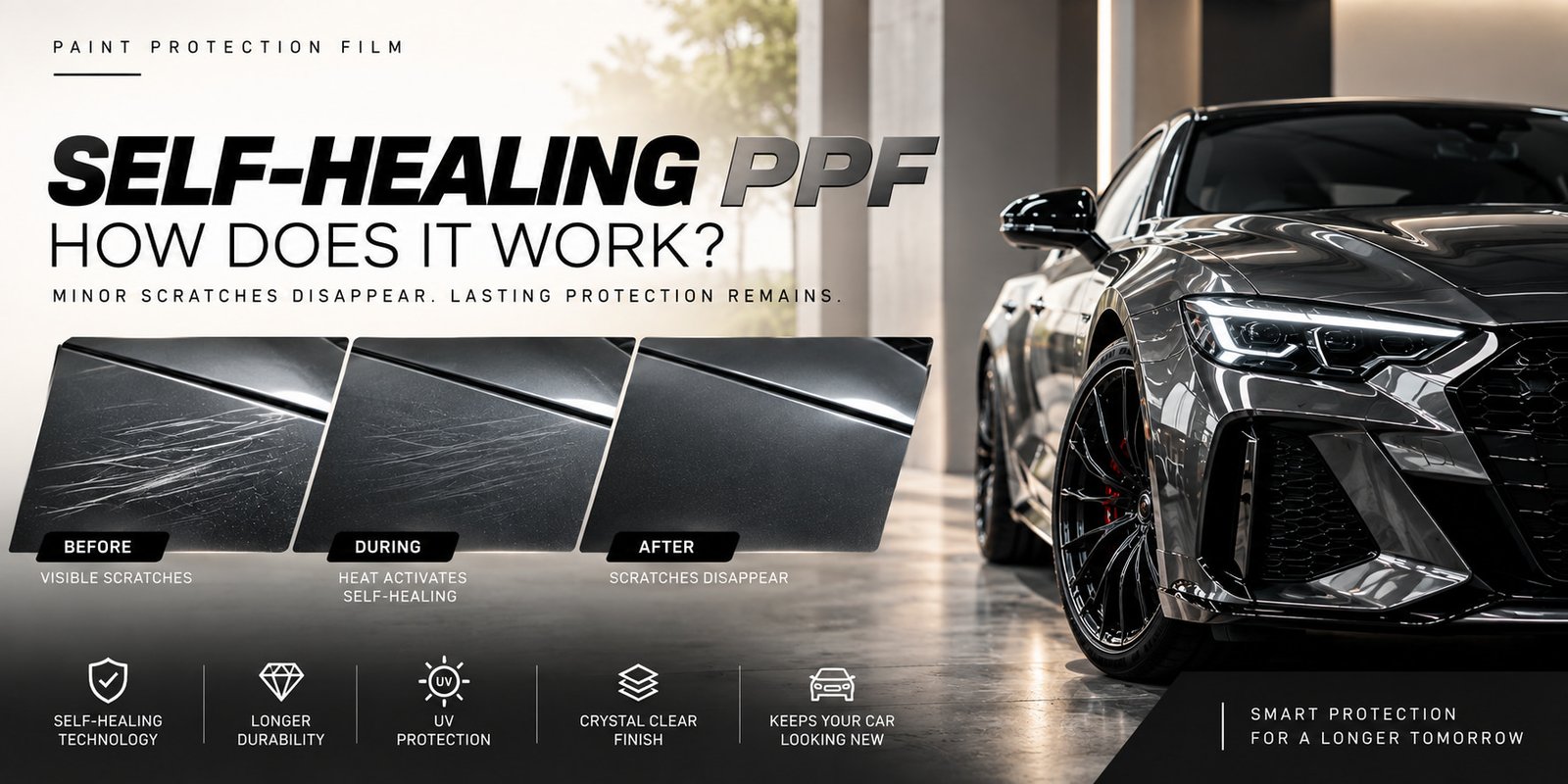
Self-Healing PPF – How Does It Work? Complete Guide 2026
Learn how self-healing PPF works, how heat helps repair minor scratches, its benefits, limitations, maintenance and car paint protection.
Read More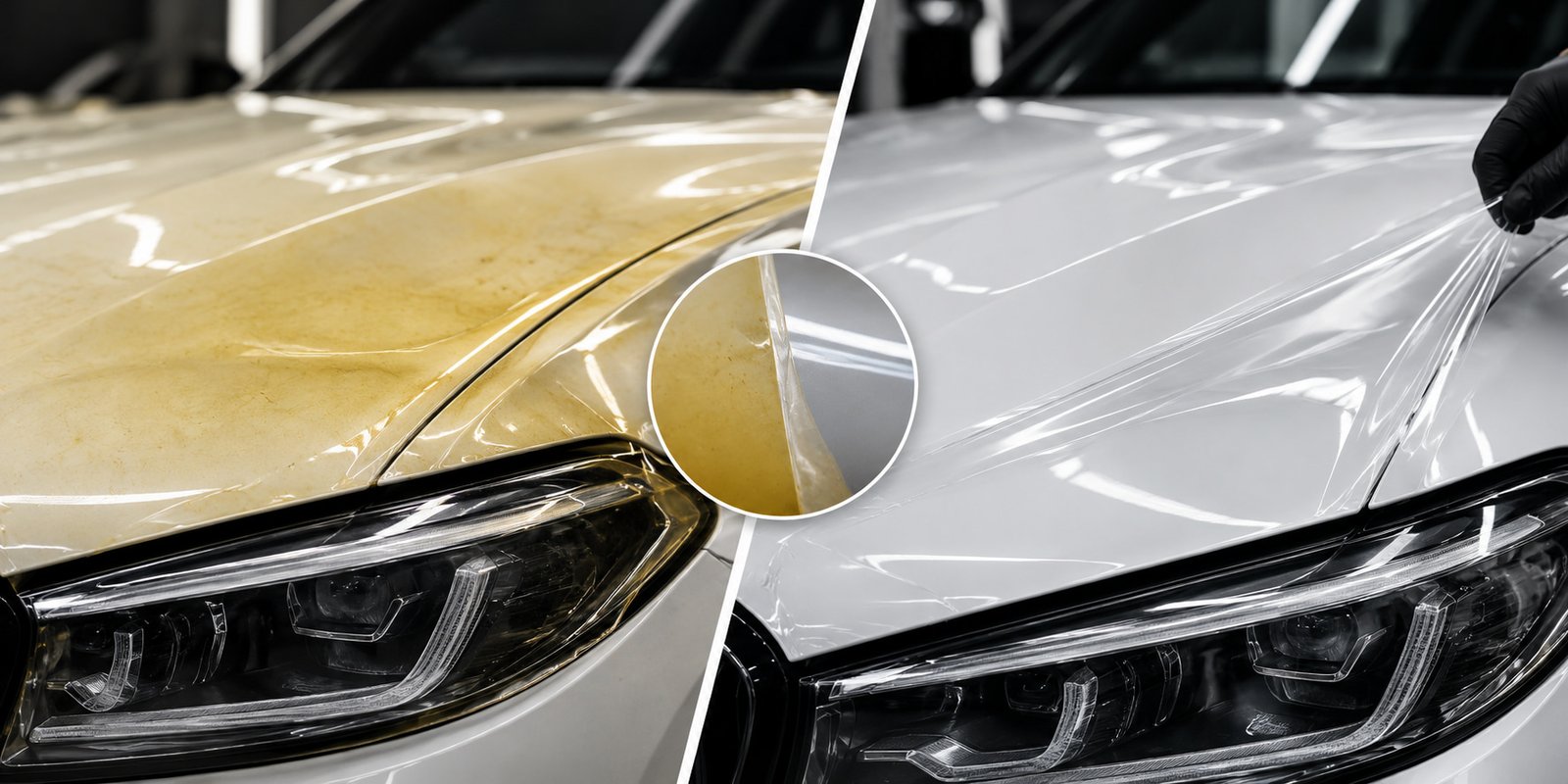
PPF Yellowing – Why Does Paint Protection Film Turn Yellow?
Learn why PPF can turn yellow, the causes of discoloration, prevention tips, maintenance, film quality, warranty and when yellowed PPF may need replacement.
Read More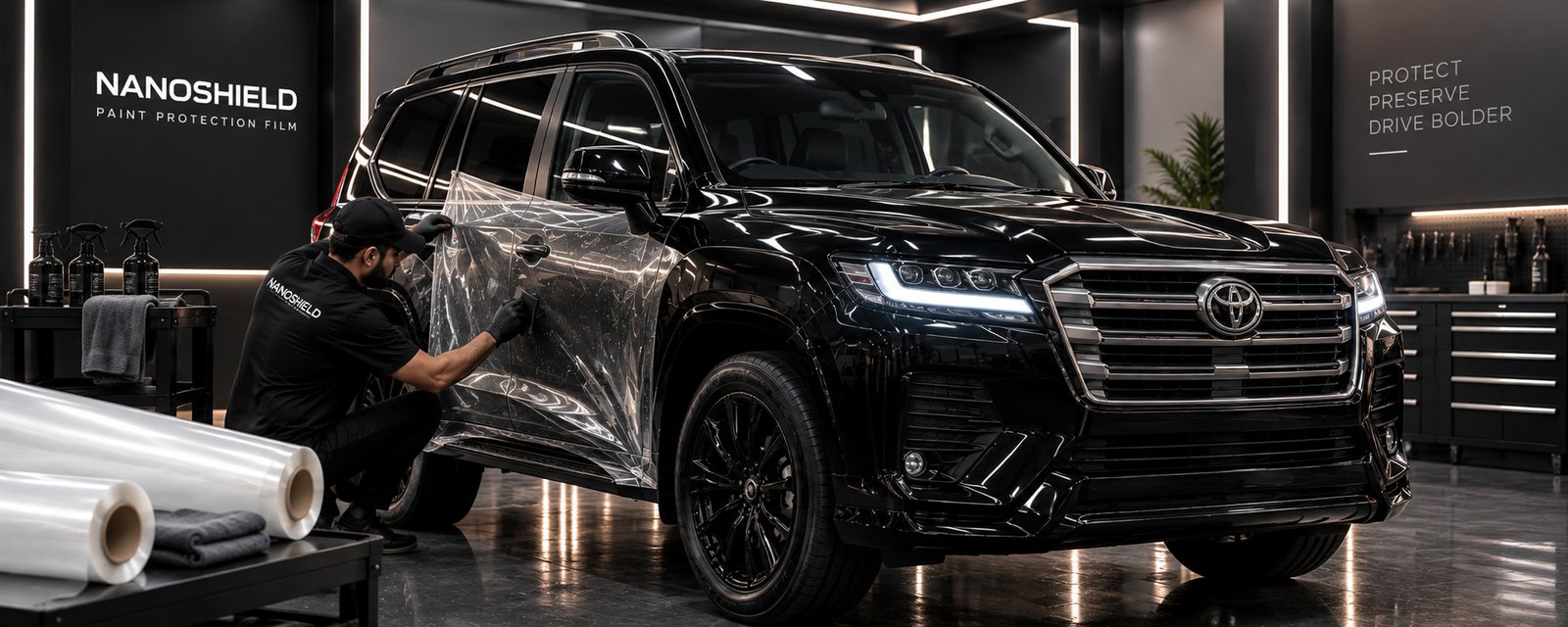
PPF for New Cars in Lahore – Complete Guide 2026
Learn about PPF for new cars in Lahore, including when to install Paint Protection Film, full vs partial coverage, price, film types, installation, maintenance and warranty.
Read More
PPF Warranty – What Does PPF Warranty Cover? Complete Guide 2026
Learn what PPF warranty covers, including yellowing, peeling, bubbling, cracking, delamination, warranty periods, exclusions and how to make a PPF warranty claim.
Read More
How to Choose the Right PPF for Your Car – Complete Guide 2026
Learn how to choose the right PPF for your car, including material, thickness, finish, self-healing, optical clarity, adhesive quality, warranty, coverage and professional installation.
Read More